

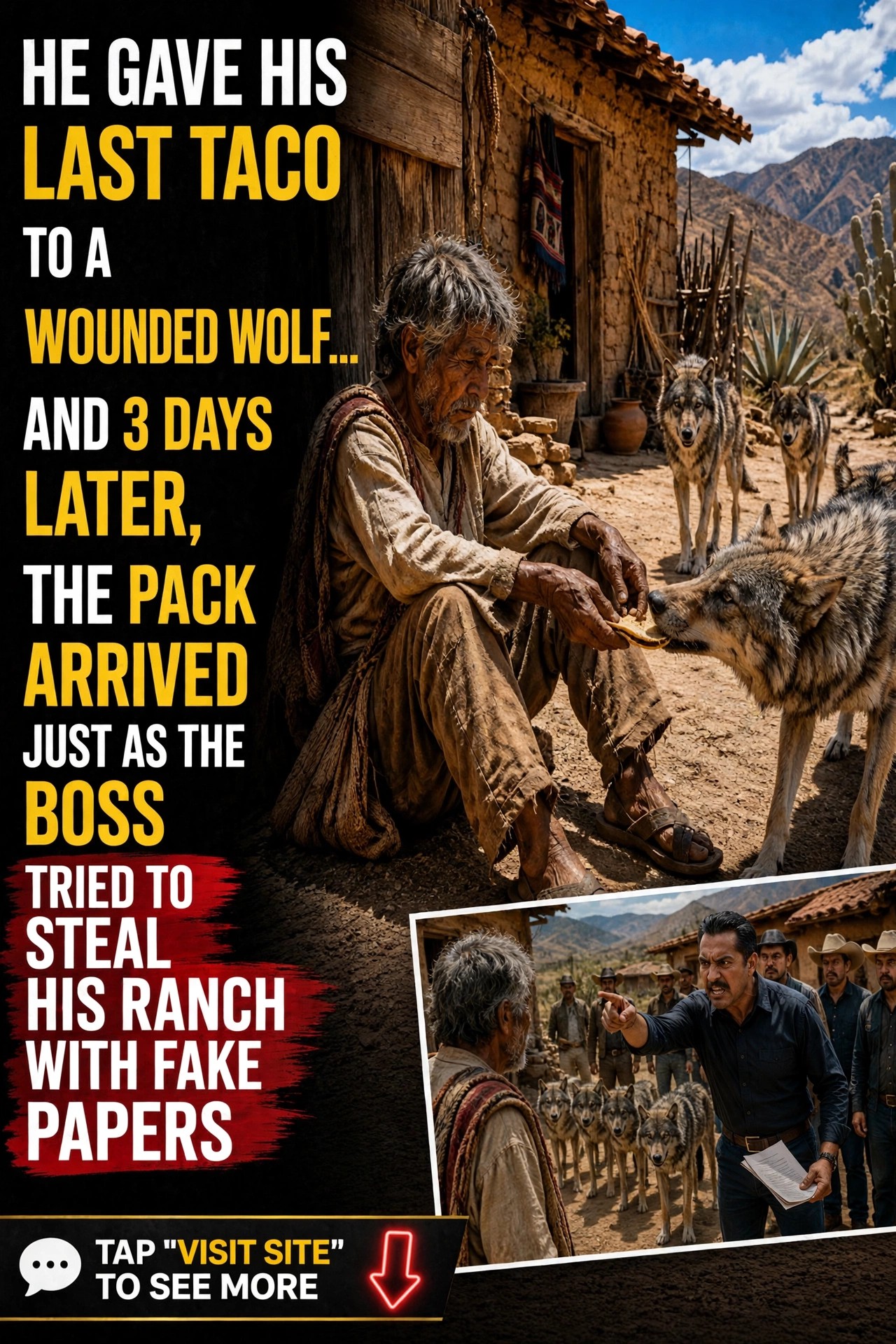
Don Jacinto Reyes, seventy years old, lived alone in a stone hut on the ranch his grandfather had fenced with his own hands, in the dry hills where the nearest neighbor was an hour’s walk away. He was poor in everything except land and dignity. One October evening, returning from the village with empty pockets, he found a wolf caught in a rusty trap by the dry creek — a big gray male, its leg torn, its eyes full of the kind of fear that expects no mercy. The village men would have told him to finish it: wolves took their goats, wolves were the enemy. Jacinto knelt, freed the trap with his machete, cleaned the wound with water from his canteen — and then did the thing the town would mock him for all winter. He unwrapped the last taco he had bought for his own dinner, his only meal that day, and laid it in front of the animal. «Eat, compadre,» he said. «Hunger is hunger, whoever carries it.»
The wolf limped into the hills. Jacinto thought that was the end of it. Three days later, at dusk, three trucks arrived at his gate. Don Baltazar, the land boss who had been buying — or taking — every ranch in the valley, stepped out with six armed men and a folder of papers: deeds, he claimed, proving that Jacinto’s grandfather had sold the land in 1962, with a judge’s order to vacate by morning. The papers were perfect forgeries; Baltazar had used the same trick on four widows that year. Jacinto stood alone in his doorway with an old shotgun he did not dare raise, knowing that whatever happened next would happen without witnesses.
That was when the growling began. It came first from behind the stone wall — one voice, deep and unhurried. Then from the corral. Then from the ridge. Eyes appeared in the dusk like embers: the gray male at the front, healed enough to stand tall, and behind him the whole pack, eleven wolves spread in a silent arc between the trucks and the old man’s door. Baltazar’s men, who feared no sheriff, discovered they feared something older. The folder of fake deeds fell in the dirt as they climbed into their trucks, and Baltazar shouted threats through a window that grew smaller and smaller down the road.
Jacinto left a plate of food by the gate every night after that, and some nights, far off, he heard the pack singing to the moon. But the story does not end with the wolves: a shepherd boy had seen the trucks, the town talked, and a state investigator who came to ask questions found Baltazar’s forgeries — the same notary, the same trick, five ranches. The land boss went to prison, the widows got their land back, and Don Jacinto, who kept his ranch until his last day, answered everyone who asked about the wolves with the same sentence: «I only gave away one taco. They decided what it was worth.»