

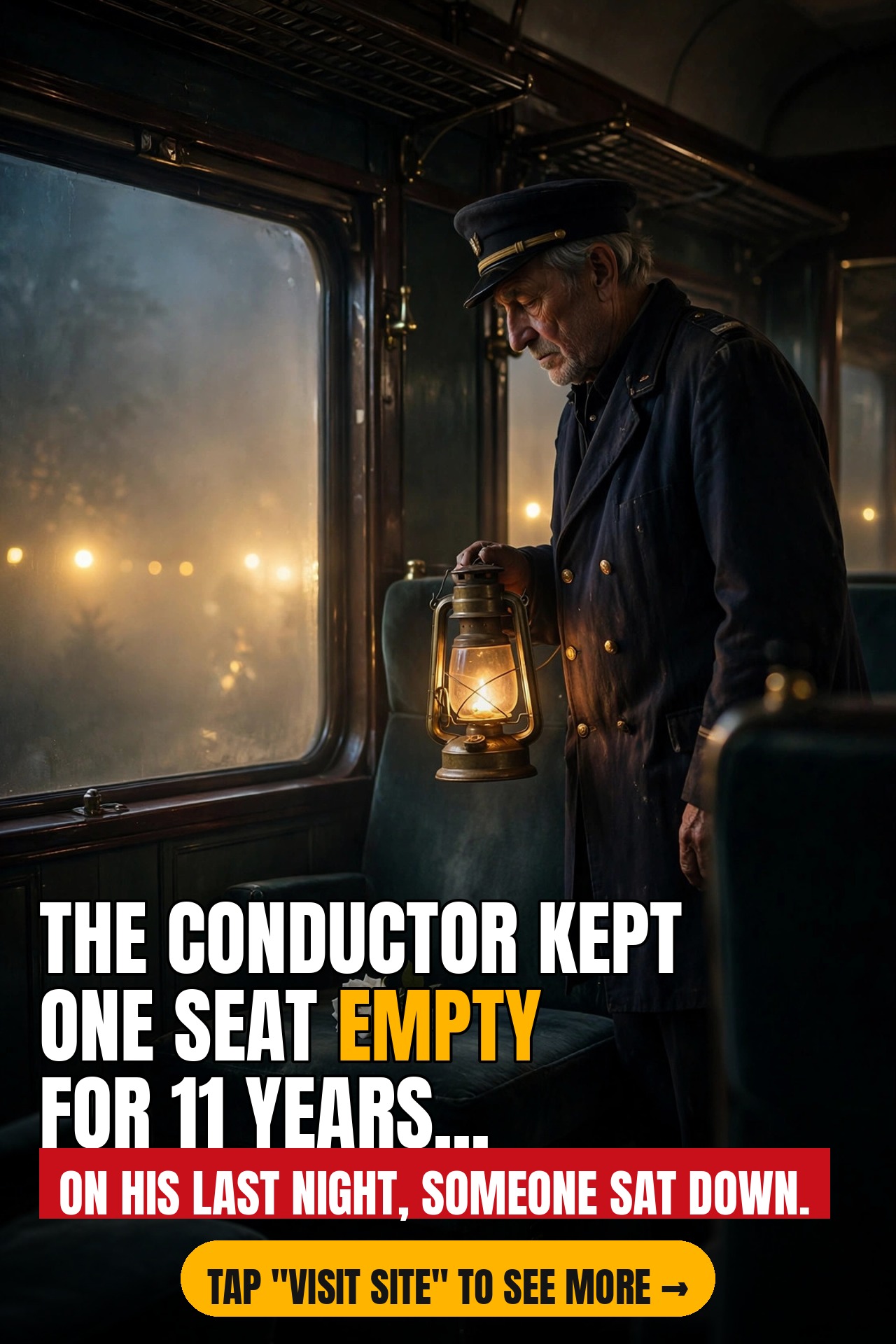
Elias Grant had worked the night train between the capital and the northern coast for thirty-eight years, and for the last eleven of them he had one rule nobody understood: seat 14, by the window in the second car, stayed empty. He sold no ticket for it. He allowed no passenger to sit in it. When new staff asked why, he only said, «That seat is taken,» and walked on with his lantern.
The truth was older and sadder. Eleven years earlier, a young woman named Clara had ridden his train every Friday night to visit her mother in the hospital. She always took seat 14, always carried a paperback, and always left him a small drawing of the coastline on her ticket stub. One Friday she did not come. The next Friday, her mother called the station: Clara had died in an accident on her way to the train.
Elias never spoke of it. But every Friday, on the night run, he placed a single white rose on seat 14 and kept it empty, the way you keep a place at the table for someone who should still be coming home.
On the night of his retirement, the company gave him a plaque and the crew applauded in the depot. Elias made his last run quietly. At every stop he checked the cars the way he had ten thousand times. Seat 14 carried its rose. At the final stop before the coast, an elderly woman boarded slowly, leaning on a cane. She looked down the aisle, and then she asked the question that stopped his heart: «Is seat 14 free, conductor? My daughter always said it was the best seat on this train.»
It was Clara’s mother. She had been too ill, then too grief-stricken, to ride for eleven years. That night, knowing it was the last run of the conductor who had written her a condolence letter she had kept for a decade, she had come to sit in her daughter’s seat one time.
Elias helped her into seat 14 and placed the rose in her hands. They rode the last miles together, talking about a young woman who drew coastlines on ticket stubs. When the train reached the coast at dawn, she took his hand and said, «She always told me the conductor watched over her like a father. Now I know she was right.»
Elias retired that morning. But seat 14 was never sold again: the company, when it heard the story, fixed a small brass plate above it. It reads: «Reserved — for those who are still loved.»