

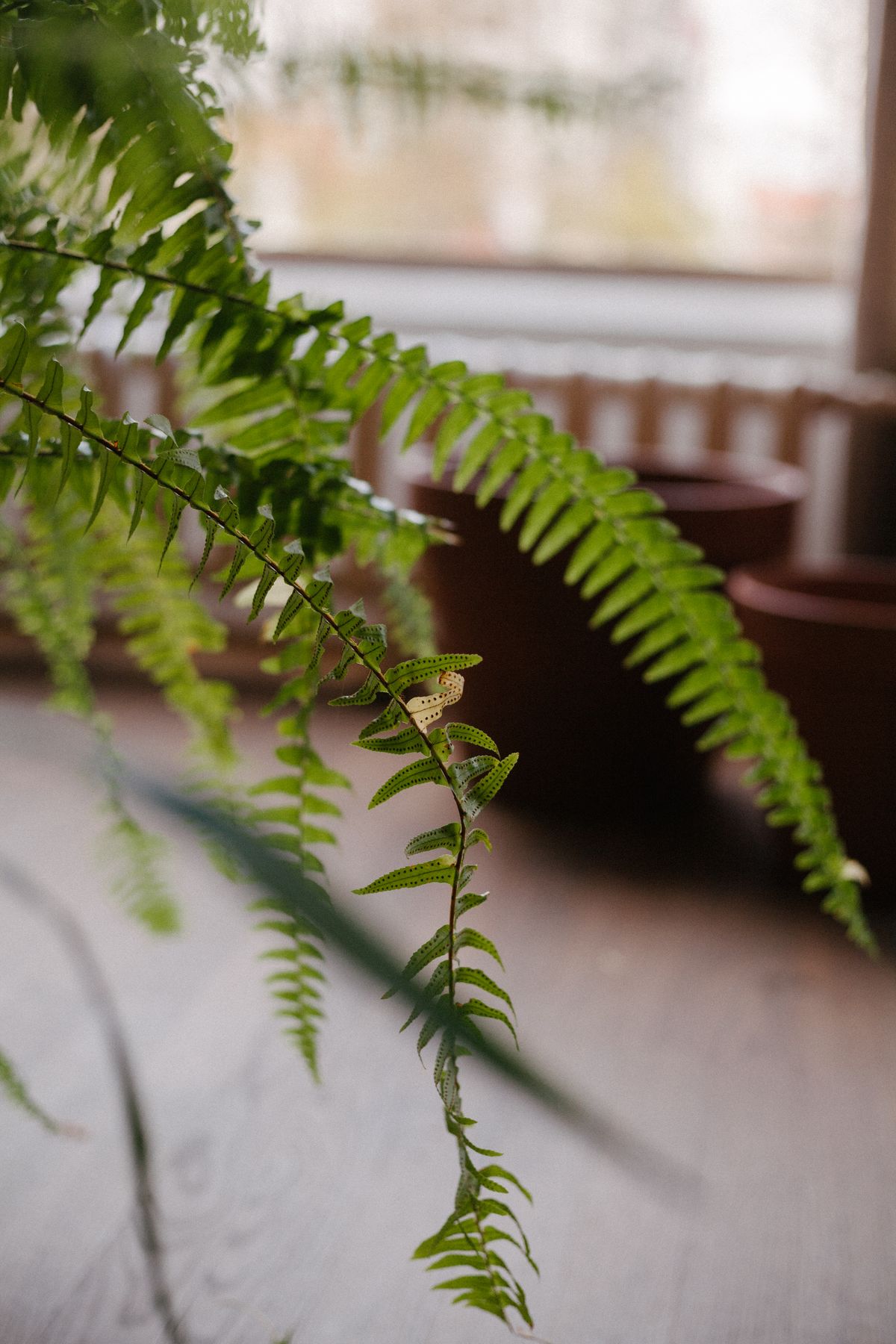
Ferns promise the lushest greenery in the house: soft, arching fronds that make any corner feel like a forest floor. Then, a month after bringing one home, the edges turn brown, fronds drop on the carpet and the plant looks like it is quietly giving up. Almost every struggling indoor fern is suffering from the same two problems — dry air and erratic watering — and both are easy to fix once you understand what a fern expects. Ferns are ancient woodland plants, and a happy home fern is simply one whose owner has recreated a small piece of woodland indoors. These seven fern care tips show you exactly how.
1. Give Bright, Indirect Light — Never Direct Sun
In the wild, ferns grow under a tree canopy, in light that is bright but filtered. Copy that at home: a spot near an east or north window, or a metre back from a sunny south window, suits almost every indoor fern. Direct midday sun scorches fronds pale and crispy within days, while a truly dark corner stretches the plant thin and pale. If you can read comfortably in the spot at noon without a lamp, the light is probably right.
2. Raise the Humidity Around the Plant
Central heating and air conditioning pull indoor humidity far below what ferns need, and dry air is the number one cause of brown, crispy leaflets. Group your fern with other plants so they humidify each other, stand the pot on a tray of pebbles and water, or run a small humidifier nearby in winter. Misting feels helpful but raises humidity for only minutes; it is a supplement, never a solution. Consistent ambient moisture is what keeps new fronds unfurling green instead of brown.
3. Keep the Soil Evenly Moist, Never Soggy
Ferns like the watering rhythm of a forest floor: always slightly damp, never bone dry and never swimming. Water when the top centimetre of compost feels just dry, then water thoroughly until it runs from the drainage holes, and empty the saucer afterwards so the roots never sit in water. Letting a fern wilt from thirst, then flooding it, is the cycle that kills most plants. Small, regular drinks beat heroic rescues every time, and rainwater or rested tap water avoids the leaf-spotting minerals some ferns dislike.
4. Choose the Right Pot and Compost
A fern’s fine roots need a mix that holds moisture yet breathes: standard houseplant compost with extra leaf mould or fine bark works well. Plastic pots keep moisture longer than terracotta, which suits thirsty ferns like maidenhairs, while Boston ferns forgive either. Whatever you choose, drainage holes are non-negotiable. Repot in spring when roots circle the base, moving up just one pot size; a fern drowning in a huge pot of wet compost rots faster than a slightly snug one.
5. Feed Little and Often in the Growing Season
Ferns are light feeders from light soils, so a strong fertilizer burns their delicate fronds. From spring to early autumn, feed every two to four weeks with a balanced liquid houseplant food at half the strength on the label. Stop feeding entirely in winter, when growth slows and the plant rests. Pale, slow growth in summer usually means hunger; brown tips appearing right after feeding usually mean you overdid it. When in doubt, dilute more.
6. Groom Regularly and Remove Dead Fronds
A few minutes of grooming keeps a fern looking lush and growing strongly. Snip out brown or yellowing fronds at the base with clean scissors, shake out the dead leaflets that collect in the crown, and turn the pot a quarter turn each week so all sides get light and the plant grows evenly instead of leaning. Wipe dusty fronds gently with a damp cloth: clean leaves photosynthesise better and show pests early, when they are still easy to wash off.
7. Watch for the Three Warning Signs
Your fern talks to you through its fronds. Crispy brown edges mean the air is too dry or watering has lapsed. Yellowing lower fronds and a sour smell mean the compost is staying too wet. Pale, stretched growth means it needs more light. Catching these signals within a week or two, and adjusting one thing at a time, turns fern keeping from a guessing game into a routine. Most ferns that look half dead in winter bounce back from the crown in spring if the roots stayed alive.
Light, moisture and humidity, held steady: that is the entire secret of a lush indoor fern. Set up the woodland conditions once, keep the rhythm, and your fern will repay you with years of soft green growth.