

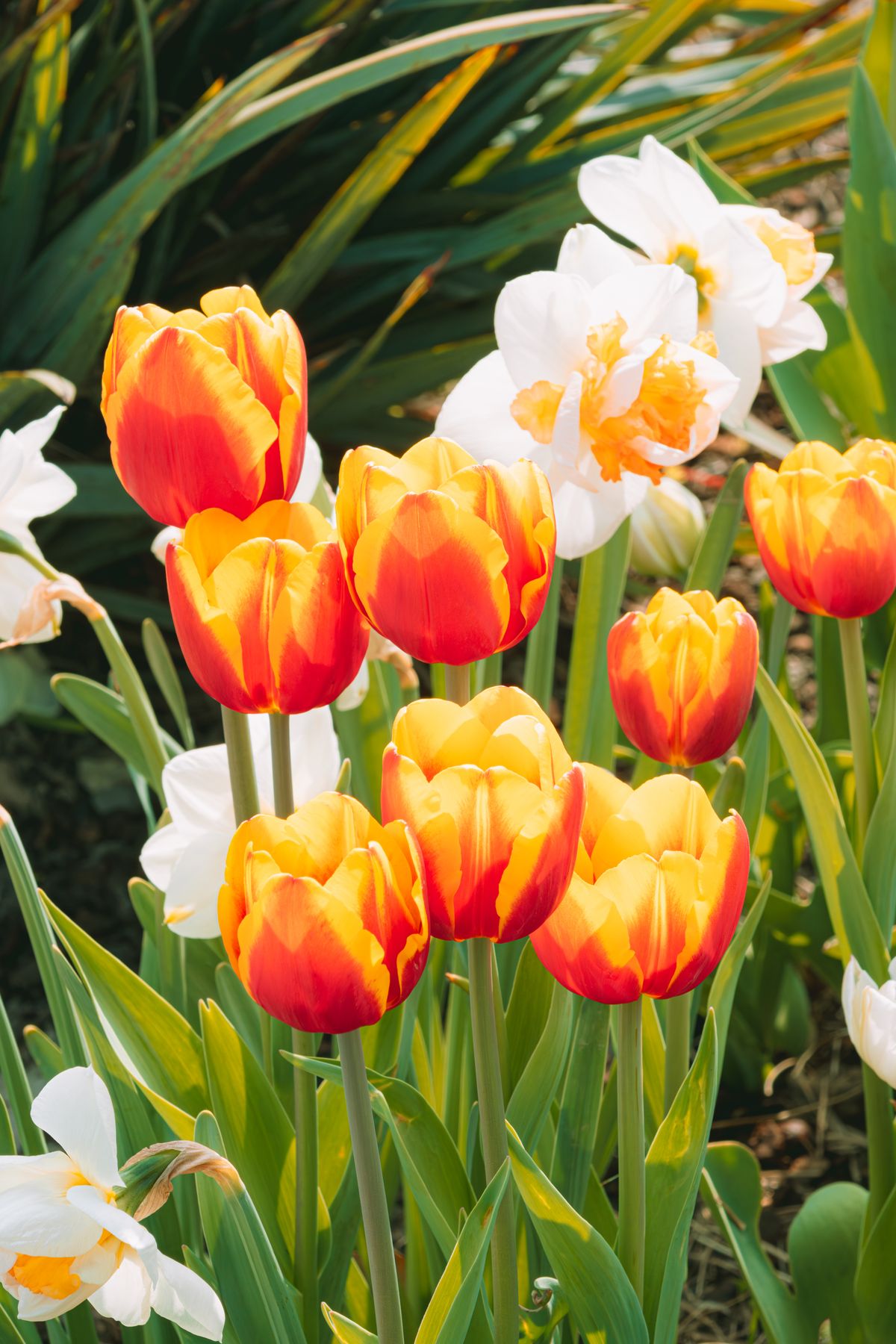
After a long, grey winter, nothing lifts the spirits like the first tulips and daffodils pushing through the soil. Spring bulbs are one of the easiest ways to fill a garden with colour, and the work happens months earlier, in autumn, when planting them feels like sending a gift to your future self. These nine tips will help you plant bulbs that flower in wave after wave, from the first crocus to the last allium.
Plant at Three Times the Bulb’s Height
The golden rule of bulb planting is simple: plant each bulb at a depth of about three times its own height. A small crocus goes just a few centimetres down, while a large tulip needs a deeper hole. Planting at the right depth protects the bulb from frost and from being dug up by animals, and it helps the stem grow strong enough to hold the flower. Measure the first few, and soon you will be able to judge by eye.
Pointy End Up, Always
Every bulb has a top and a bottom: the pointy end goes up, and the flat, slightly hairy end goes down, where the roots will grow. Planting a bulb upside down will not usually kill it — the shoot will bend and find its way up — but it wastes the plant’s energy and delays flowering. If you genuinely cannot tell which end is which, plant the bulb on its side and it will sort itself out.
Fix Drainage Before You Plant
Bulbs rot in wet soil, so drainage comes first. If your soil is heavy clay, dig in grit or coarse sand and plant the bulbs on a small bed of grit at the bottom of the hole. In pots, make sure there are drainage holes and add a layer of broken pottery or gravel at the base. A bulb sitting in water over winter will rot long before spring, so this step is worth the effort.
Plant in Drifts and Clusters, Never Rows
A single line of tulips looks stiff and unnatural. For a display that looks like nature planted it, group bulbs in drifts and clusters of at least seven to ten, with irregular spacing. Scatter a handful over the area and plant them where they fall — the random pattern looks far more natural than a ruler-straight row. Bigger drifts make a bigger impact, so be generous where you can.
Layer a Lasagne Pot for Two Months of Flowers
Lasagne planting layers different bulbs at different depths in one pot, so they flower in succession. Put late tulips at the bottom, then a layer of soil, then daffodils, then crocus or muscari near the top. The pot will flower for two months or more, with each layer taking over as the last one fades. It is the best trick for a small garden or a balcony, and it works beautifully by a front door.
Time Planting for Cold Soil, Not the Calendar
Bulbs need a period of cold to flower well, but they should go into soil that has cooled down after summer. A good rule is to plant when the soil feels cool to the touch and night temperatures are regularly below 10 degrees — usually mid to late autumn. Planting too early in warm soil can encourage disease, while planting too late leaves the roots little time to establish before winter.
Feed at Planting and Again After Flowering
Give bulbs a good start by adding a little bulb fertiliser or bone meal to the planting hole, mixed into the soil below the bulb rather than touching it directly. After flowering, feed again with a liquid fertiliser while the leaves are still green, because this is when the bulb stores energy for next year. Never cut the leaves off after flowering — let them die back naturally.
Choose Succession on Purpose
Nonstop colour does not happen by accident; it happens by choosing varieties that flower at different times. Plant early crocus and snowdrops for late winter, daffodils and early tulips for mid-spring, and late tulips and alliums for early summer. Check the flowering time on each packet and plan the sequence deliberately. With a little planning, something will be in flower in your garden for three months.
Mark the Spots and Mind the Fork
Once bulbs are underground, they are invisible — and easy to damage when you dig elsewhere in the garden. Mark each planting spot with a small label, a pebble or a note on your garden plan, and be careful with the fork in spring. A simple sketch of where you planted what will save you from accidentally spearing a tulip, and it will help you remember what is coming up where.
Planting spring bulbs is an act of optimism: a little work in autumn, a long winter of waiting, and then weeks of colour when you need it most. Follow these nine tips, plant generously, and your spring garden will be the envy of the street.