

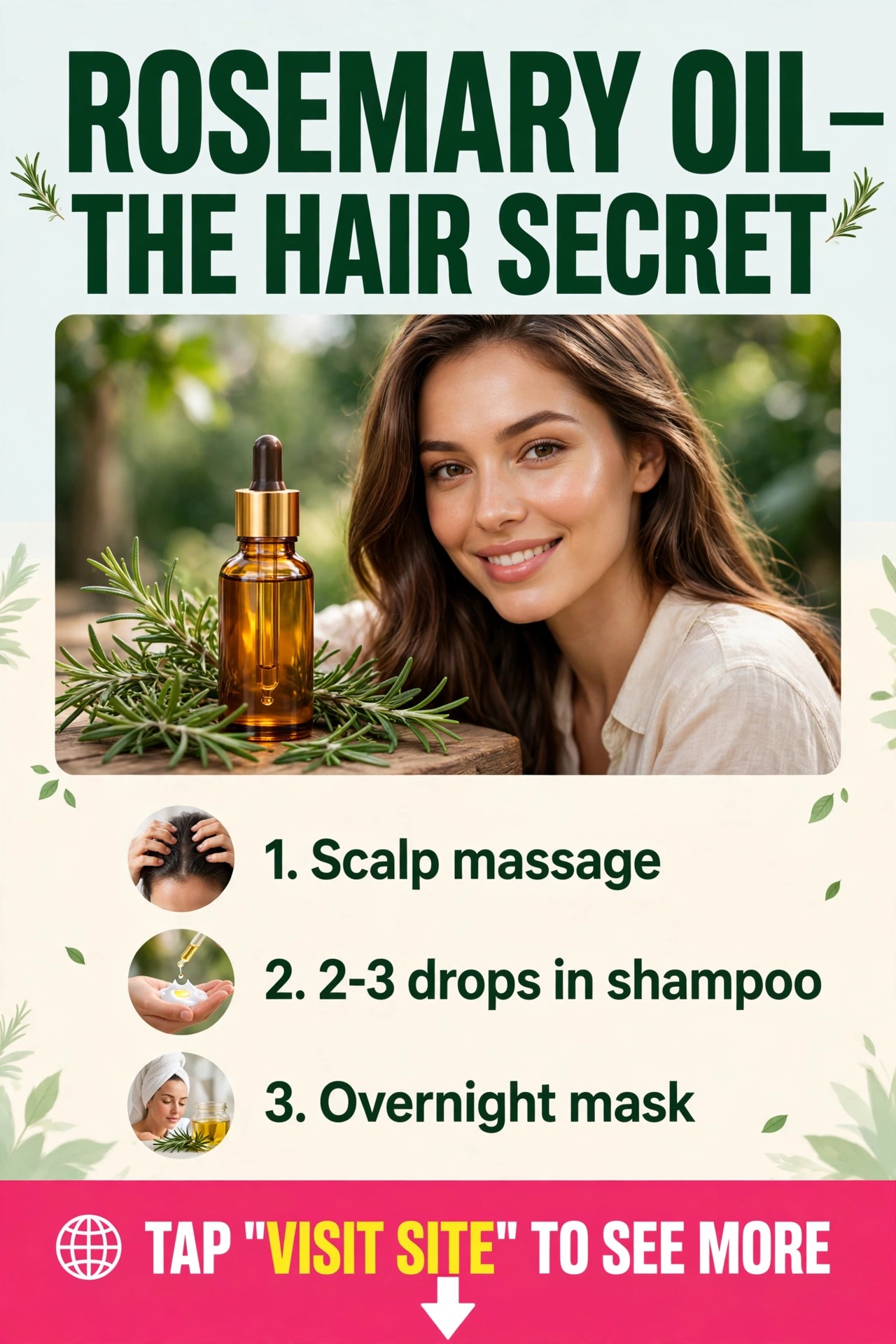
Rosemary is far more than a seasoning for roast potatoes. For centuries, this fragrant Mediterranean herb has been part of traditional hair rituals, and today rosemary oil has become one of the most talked-about natural hair ingredients in the world. Fans love it because it is affordable, easy to find and simple to add to a routine — as long as you use it the right way.
Why people reach for rosemary oil
Rosemary is traditionally used to support a healthy-looking scalp and hair that looks fuller and shinier over time. Its fresh, herbal scent also makes any routine feel like a mini spa moment. The key word is routine: rosemary rewards consistency, not one single use. Think of it as a habit, like watering a plant.
Way 1: The scalp massage
This is the classic method. Mix 4 to 5 drops of rosemary essential oil with 1 tablespoon of a carrier oil such as jojoba, sweet almond or coconut oil. Part your hair in sections, apply the blend to the scalp and massage gently with your fingertips — never your nails — for 3 to 5 minutes. Leave it on for at least 30 minutes, or a few hours if you have time, then wash as usual. Repeat 2 to 3 times a week.
Way 2: Drops in your shampoo
The easiest option for busy people: add 2 to 3 drops of rosemary oil to the amount of shampoo you are about to use, right in your palm. Massage it into the scalp, let it sit for 2 or 3 minutes while you finish your shower, and rinse well. Your hair will smell wonderfully fresh, too.
Way 3: The overnight mask
Once a week, warm 2 tablespoons of carrier oil with 5 drops of rosemary oil between your palms. Work it through the scalp and lengths, braid or bun your hair, and cover your pillow with an old towel or wear a shower cap. Wash thoroughly in the morning — two shampoo rounds usually do it.
Rules that keep it safe and effective
- Always dilute. Pure essential oil straight on the scalp can irritate; the carrier oil is not optional.
- Patch test first behind your ear and wait 24 hours if your skin is sensitive.
- Be consistent for at least 8 to 12 weeks before judging results.
- Less is more. More drops do not mean faster results — they usually mean an itchy scalp.
One honest note: rosemary oil is a cosmetic routine, not a medical treatment for hair loss. If you notice sudden or heavy shedding, a doctor or dermatologist should take a look.
Used patiently and correctly, this little bottle can turn an ordinary wash day into a ritual your hair will thank you for.