

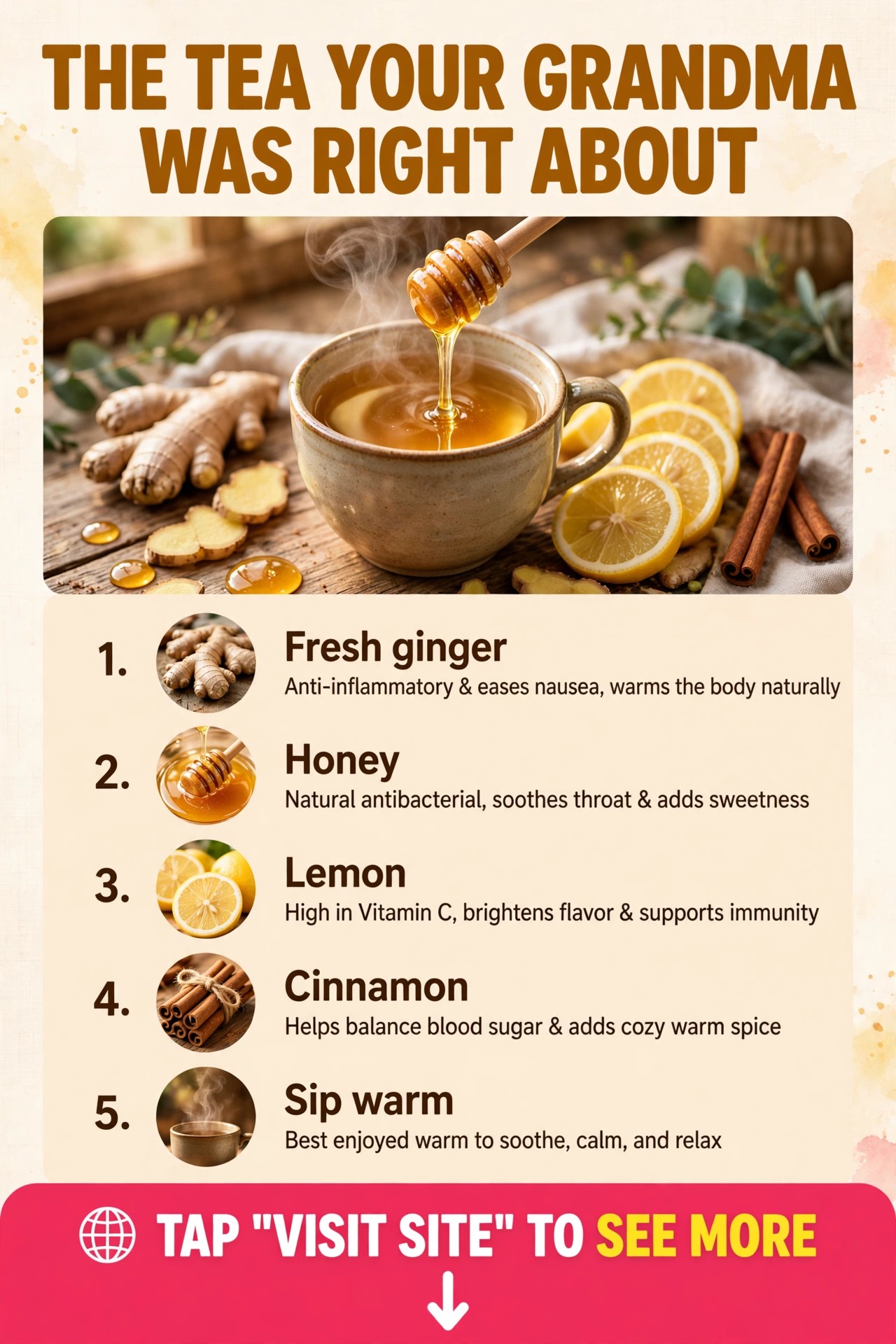
Every family has one: the person who, at the first sniffle or chilly evening, puts the kettle on and starts slicing ginger. Grandmothers across the world have served ginger and honey tea for as long as anyone can remember — and cold season after cold season, we keep discovering they were right. Not because it is magic, but because few things comfort a body quite like a warm, spicy-sweet cup held in both hands.
What you need
- A thumb-sized piece of fresh ginger (about 20 g)
- 2 cups of water
- 1 to 2 teaspoons of raw honey
- Juice of 1/2 lemon
- 1 small cinnamon stick (optional, but lovely)
Step by step
- Wash the ginger well and slice it thinly — no need to peel it if it is clean; much of the flavor lives near the skin.
- Simmer the ginger (and cinnamon, if using) in the water for about 10 minutes. A gentle simmer, not a violent boil, extracts the warmth beautifully.
- Remove from the heat, cover and rest for 2 or 3 minutes.
- Strain into your favorite mug and let it cool slightly until it is warm, not scalding.
- Now stir in the honey and lemon. Adding honey to boiling water dulls its delicate qualities, so patience pays off.
- Sip slowly, somewhere cozy. A blanket is an unofficial but highly recommended ingredient.
Why this cup comforts so well
- Ginger is traditionally used to support comfortable digestion and brings a warming sensation that feels wonderful when you are chilled.
- Honey coats the throat and softens the tea’s spicy edge — a pairing used in folk traditions everywhere.
- Lemon adds vitamin C and brightness that lift the whole flavor.
- Cinnamon contributes warmth and a hint of sweetness with no sugar at all.
- The warmth itself helps you feel soothed and encourages you to rest and hydrate — which is half the battle in cold season.
Practical tips
- Fresh ginger beats powder here: juicier, brighter, warmer.
- Make a double batch and keep it in a thermos to sip through the day.
- For extra depth, add a slice of orange or a couple of cloves.
- Sweeten gently: the honey should round the flavor, not turn the tea into dessert.
One honest note: this tea is a comfort measure, not a cure for colds or flu. If you have a high fever, symptoms that last more than a few days or trouble breathing, see a doctor promptly.
Kettle on, ginger sliced, blanket ready — some traditions survive because they simply make us feel cared for.