

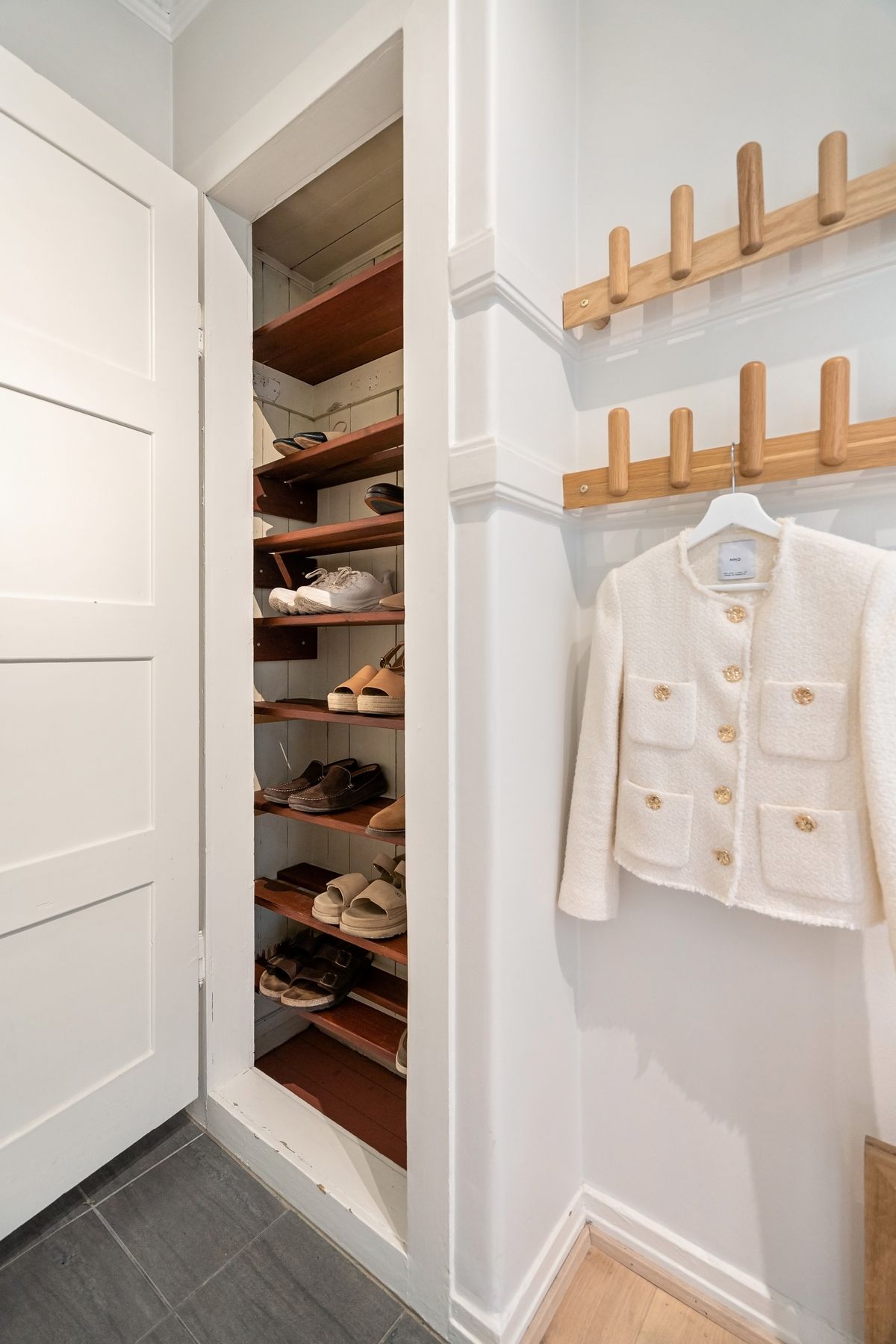
Most homes do not have a mudroom; they have a front door that opens straight into daily chaos. Shoes multiply, keys vanish, mail lands on the nearest surface and coats take over a chair. But a mudroom is really just a set of jobs: a place to sit, hang, drop and hide. These ten ideas rebuild those jobs along one wall of the entry you already have, most of them in an afternoon, without any construction. Measure the wall nearest the door and give every arriving object a home within two steps of it.
1. Install a Row of Sturdy Wall Hooks
Hooks are the mudroom’s hardest worker. A row at adult height for coats and bags, plus a lower row for kids, turns a blank wall into a landing strip. Choose hooks that screw into studs or use proper anchors, because a hook that falls out in week one teaches everyone to go back to the floor pile. Space them wider than you think; crowded hooks are just a vertical pile.
2. Choose a Slim Shoe Cabinet
Shoes are the biggest entryway mess, and a tilt-out shoe cabinet only about six inches deep hides eight to twelve pairs behind a flat front that looks like furniture. It beats a rack in small spaces because the shoes disappear completely. Measure your biggest shoes before ordering, and put the two pairs each person wears most in the cabinet; the rest belong in bedroom closets, not at the door.
3. Add a Bench with Baskets Underneath
A bench gives people somewhere to sit to put shoes on, which quietly stops shoes from traveling into the house. Baskets underneath hold hats, gloves, leashes and sports gear, one per person or one per category. Even a sturdy storage ottoman works in a tiny entry. The rule that keeps it working: baskets get emptied back to their categories once a week, or they become junk drawers with handles.
4. Hang a Mirror with a Shelf
A mirror near the door earns its place twice: last check before leaving, and it bounces light into what is usually the darkest corner of the home. One with a small shelf or ledge underneath catches sunglasses, lip balm and the keys that used to wander. In a narrow entry, a round mirror softens the corridor feel and makes the whole improvised mudroom look deliberate instead of assembled.
5. Create a Key and Mail Drop Zone
Keys and mail cause the frantic searches, so give them one fixed, tiny home: a small tray, bowl or wall-mounted organizer right beside the door, and nothing else allowed in it. Sort mail standing up the moment it arrives, recycling in hand, and the paper pile never forms. This two-minute habit plus one small tray ends the where-are-my-keys ritual in most households within a week.
6. Use a Corner Coat Tree
If your entry wall is short or interrupted by doors, the corner is free real estate. A coat tree or a corner rack with hooks holds coats, hats and bags in about one square foot of floor. It suits rentals because nothing attaches to the wall. Weight the base or choose a wide-footed model; a tipping coat tree creates more chaos than it solves, especially with kids pulling coats down.
7. Add an Over-Door Organizer Inside the Entry Closet
Many mudroom-less homes do have a small entry closet that is mostly wasted air. An over-door organizer on its inside face stores gloves, sunscreen, dog supplies and umbrellas in clear pockets you can see at a glance. Add a second rod or shelf risers inside and the closet starts working like the mudroom storage you wished for, while the door still closes on all of it.
8. Pick a Narrow Console or Floating Shelf
In a hallway entry, a console table under twelve inches deep, or a floating shelf if even that will not fit, creates the surface every entry needs without blocking the walkway. A basket on top for wallets and a drawer or lower basket for chargers keeps the surface itself clear. Clear is the goal: a drop surface that is already full just moves the pile somewhere else.
9. Stand Umbrellas and Boots in One Tall Bin
Wet gear needs a home that can get wet. A tall basket, metal bin or boot tray zone in the corner catches umbrellas, rain boots and snow scrapers before they drip across the floor. Put a washable mat under the whole entry system and the dirt stops at the door too. In dry seasons the same bin holds sports equipment and reusable shopping bags.
10. Label One Basket per Person
The system survives daily life when nobody has to think. One labeled basket or hook per person, sized to what actually comes through the door, means kids and guests sort themselves. When a basket overflows, its owner edits it down; that is the maintenance rule printed on the label if needed. Five minutes a week keeps the entry working, and coming home starts to feel calm instead of loud.
A mudroom was never about the room; it is about hooks, a seat, hidden shoe storage and one drop zone. Build those four jobs into the wall you have, keep the floor clear, and the front door becomes the most organized place in the house.