

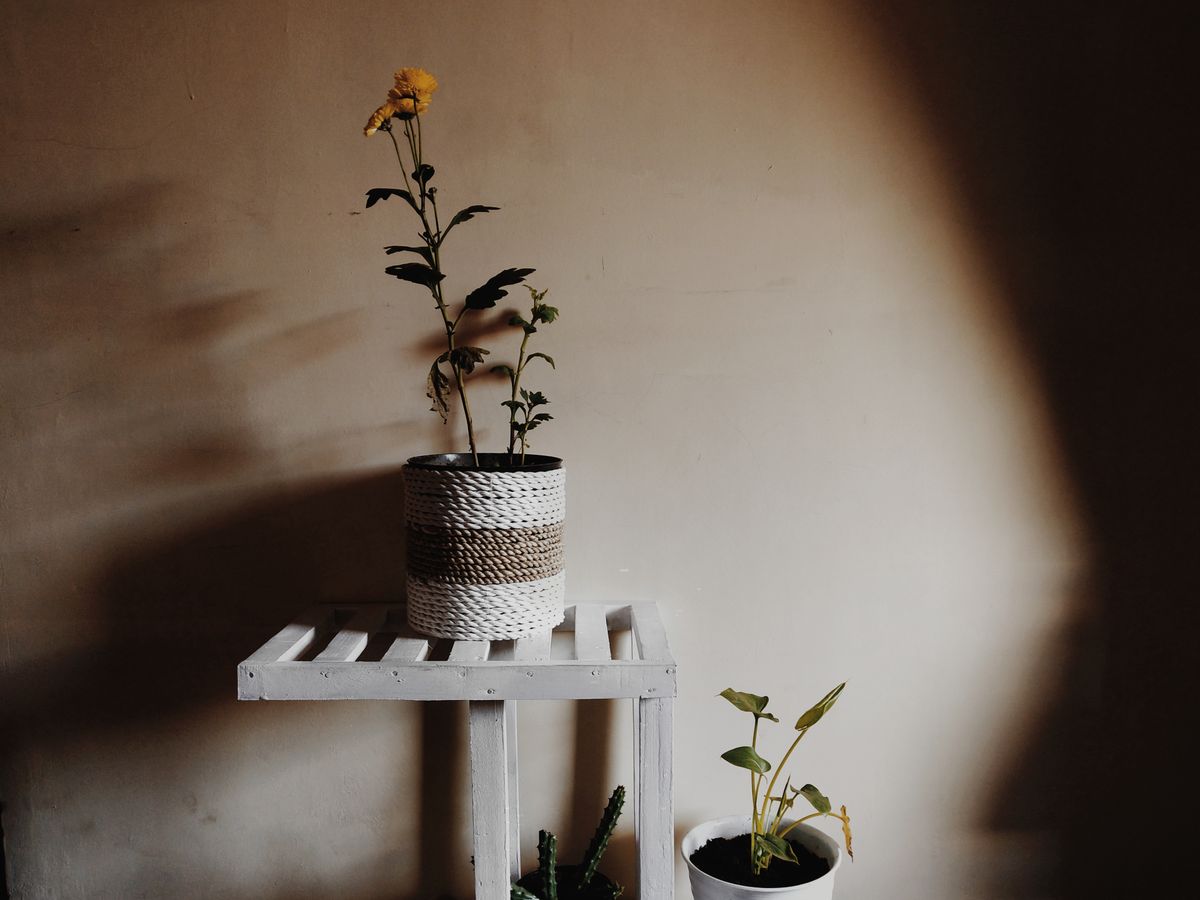
Plants look better raised — it is that simple. A stand lifts a plant toward the light, gives it presence in the room, protects floors from water rings, and lets you group plants at different heights, which is the whole secret behind those lush corners all over Pinterest. The nine ideas below split into builds and fakes: real weekend projects with dowels and scrap wood, and zero-tool tricks using stools, ladders and furniture you already own. Every budget, every skill level, every rental rule is covered. Your plants are about to get a promotion.
1. The Classic Dowel Mid-Century Stand
Four wooden dowels, two cross pieces and a ring or square frame sized to your pot: that is the iconic mid-century plant stand, and it is a genuine beginner build. Cut the legs to equal lengths, join them with the cross supports at pot height, and sand and oil the wood. It lifts a plant to exactly the right height for light and looks like it came from a design shop. Measure your pot first — the stand must fit the pot, not the other way around.
2. An Old Wooden Ladder, Reborn
A short wooden ladder — thrifted, borrowed from the garage, or bought unfinished — becomes a tiered plant display with zero building. Lean it against a wall or open it as an A-frame and set pots on the steps, smaller ones higher up. The rungs naturally create levels, which is exactly how plant stylists build those lush corners. Sand rough spots and add a coat of paint or stain if the wood looks tired.
3. The $5 Stool Trick (The Best Fake)
Here is the fake that fools everyone: a small wooden stool is already a perfect plant stand. Thrift stores are full of sturdy stools for a few dollars, and a fresh coat of paint in your room’s accent color makes one look intentional and custom. Set a trailing plant on top and let the vines do the decorating. No tools, no building, ten minutes total — this is the highest style-per-effort ratio on the list.
4. Stacked Crates for a Whole Collection
Wooden crates stacked on their sides become shelving, and shelving becomes a plant wall. Arrange two or three crates in a stable stack, secure them together with screws or strong brackets, and fill the openings with plants of different heights and leaf shapes. The boxes frame each plant like a little stage. Leave the wood raw for a rustic look or paint the insides a contrasting color for a modern pop.
5. Hairpin Legs on a Wood Slice
Screw three or four short hairpin legs — sold inexpensively in packs — onto the underside of a thick wood slice or a round cutting board, and you have a low, modern stand in about fifteen minutes. The live edge of a wood slice adds organic texture that suits leafy plants beautifully. This one works especially well for heavy floor plants that need just a little lift off the floor for air flow and presence.
6. A Repurposed Bar Cart or Side Table
Before you build anything, shop your own house: the bar cart, side table, nightstand or plant-adjacent chair you are not using may be the stand you need. Raised surfaces with more than one level are ideal, because they let you group plants at different heights — the secret to every styled plant corner. Move the piece, arrange the plants, live with it for a week. The best DIY is sometimes just a rearrangement.
7. Cinder Block and Board Shelves
Two cinder blocks and one sturdy board make a low bench-style stand that holds a whole row of plants, indoors or on a patio. It is heavy, stable, nearly free if the materials are already around, and has that industrial look that pairs well with terracotta. Paint the blocks to soften them, or leave them concrete-gray. Because nothing is permanently joined, you can reconfigure it whenever your collection grows — and it will grow.
8. Hanging Macrame Plant Hangers (The Stand That Floats)
A stand does not have to stand: knotted macrame hangers lift plants to window height, free up every surface, and put trailing plants exactly where they show best. Kits come with cord and instructions, or follow any beginner pattern with cotton cord and a wooden ring. Hang them at staggered heights in a group of three for the full effect. Check your ceiling hook is anchored properly — a watered plant is heavier than it looks.
9. Tiered Corner Stand From Scrap Wood
Corners waste more plant space than anywhere else in a room, and a simple three-tier corner stand reclaims it. Cut three quarter-circle or triangular shelves in graduated sizes, mount them on a single vertical support or directly to the wall studs, and stack your plants up the corner toward the light. Even rough scrap wood works once it is sanded and painted. Measure the corner angle first; most are a friendly ninety degrees.
Start with the stool fake today — one thrifted stool and a trailing pothos will convince you. Then build the dowel stand when you are ready for a project. Raised, grouped and reaching for the light, your plants will never sit on the floor looking forgotten again.