

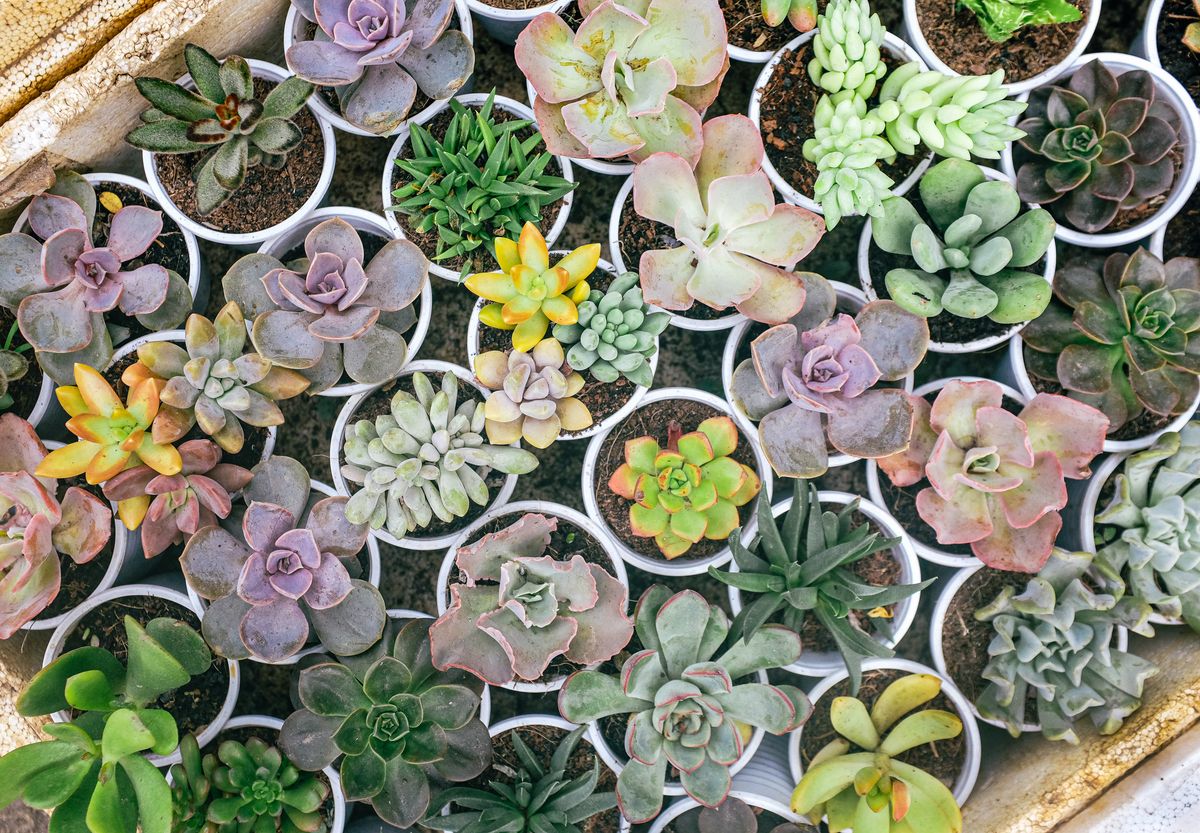
Designer succulent arrangements sell for surprising money in garden boutiques, yet the plants themselves are some of the cheapest you can buy. The expensive look never comes from rare specimens: it comes from composition. A clear focal point, a limited colour palette, contrasting textures and a beautiful finishing layer of gravel can turn a tray of bargain succulents into something that looks professionally planted. These eight succulent arrangement ideas break down exactly how those pricey displays are built, so you can copy the look at home with supermarket plants, cuttings from friends and containers you may already own.
1. Build Around One Star Rosette
Every expensive-looking arrangement has a hero: one large, perfect rosette placed slightly off-centre, with everything else supporting it. Choose your biggest echeveria as the star, then surround it with smaller plants in descending sizes. The eye reads this as deliberate design rather than a random collection, and a single larger plant costs far less than filling the whole container with medium ones.
2. Repeat a Tight Colour Palette
Boutique arrangements rarely use more than three colours. Pick a palette, such as blue-green with blush pink tips, or deep green with burgundy accents, and repeat those tones across the whole container. Echoing the same colour in two or three places ties the design together. Plants that clash with the palette go into a different pot, however pretty they are on their own.
3. Mix Textures on Purpose
Contrast is what makes an arrangement look rich. Pair smooth, flat rosettes with something spiky, something trailing and something upright: a haworthia’s points against an echeveria’s curves, a string of pearls spilling over the edge, a small crassula standing tall behind. Three or four distinct textures in one container reads as abundance, and it stops the eye from seeing a flat sea of identical leaves.
4. Finish With a Top Dressing
The fastest upgrade of all is a top dressing: a neat layer of fine gravel, crushed stone, coarse sand or tiny pebbles covering every scrap of bare soil. It is the detail that separates a hobby pot from a boutique piece. Pale gravel makes dark plants glow, dark gravel sharpens pale rosettes, and the layer also keeps soil off the lower leaves when you water.
5. Choose a Container With Presence
The pot is half the design. Low, wide bowls show off a planted tapestry best, while a tall, plain cylinder makes a single sculptural plant look like gallery art. Hunt charity shops and markets for heavy ceramic, concrete or terracotta pieces with simple shapes and no drainage drama you cannot solve with a layer of gravel. One beautiful thrifted container elevates five ordinary plants instantly.
6. Plant Tight, Like a Living Mosaic
Professionals plant succulents shoulder to shoulder so no soil gaps break the pattern. Tuck small cuttings and offsets into every space between the main plants, the way you would grout tiles. A dense arrangement looks generous and expensive from day one, and succulents tolerate close planting happily. As they grow, snip out any plant that bullies its neighbours and root the cutting into your next arrangement.
7. Add One Unexpected Accent
A single accent gives an arrangement its personality: a piece of driftwood, an interesting stone, a small crystal or a weathered shell nestled between the plants. Keep it to one or two pieces at most, placed where the eye naturally lands. Restraint is the whole trick here. A container crowded with ornaments looks playful, but one sculptural accent looks curated, calm and expensive.
8. Stage It Like a Photograph
Finally, present your arrangement the way shops do. Group pots in odd numbers, vary their heights with stands, books or upturned pots, and place the group where it gets bright light and a clean background. Wipe dust from the leaves, remove any dead foliage and turn the best side forward. Styled and lit well, the humblest collection suddenly looks like a magazine shoot.
The expensive look is really just editing: one hero plant, a disciplined palette, deliberate texture and that all-important layer of gravel on top. Start with a single bowl, plant it tightly and finish it properly, and you will never look at boutique price tags the same way again. Better still, every cutting you take makes the next arrangement cheaper than the last.