

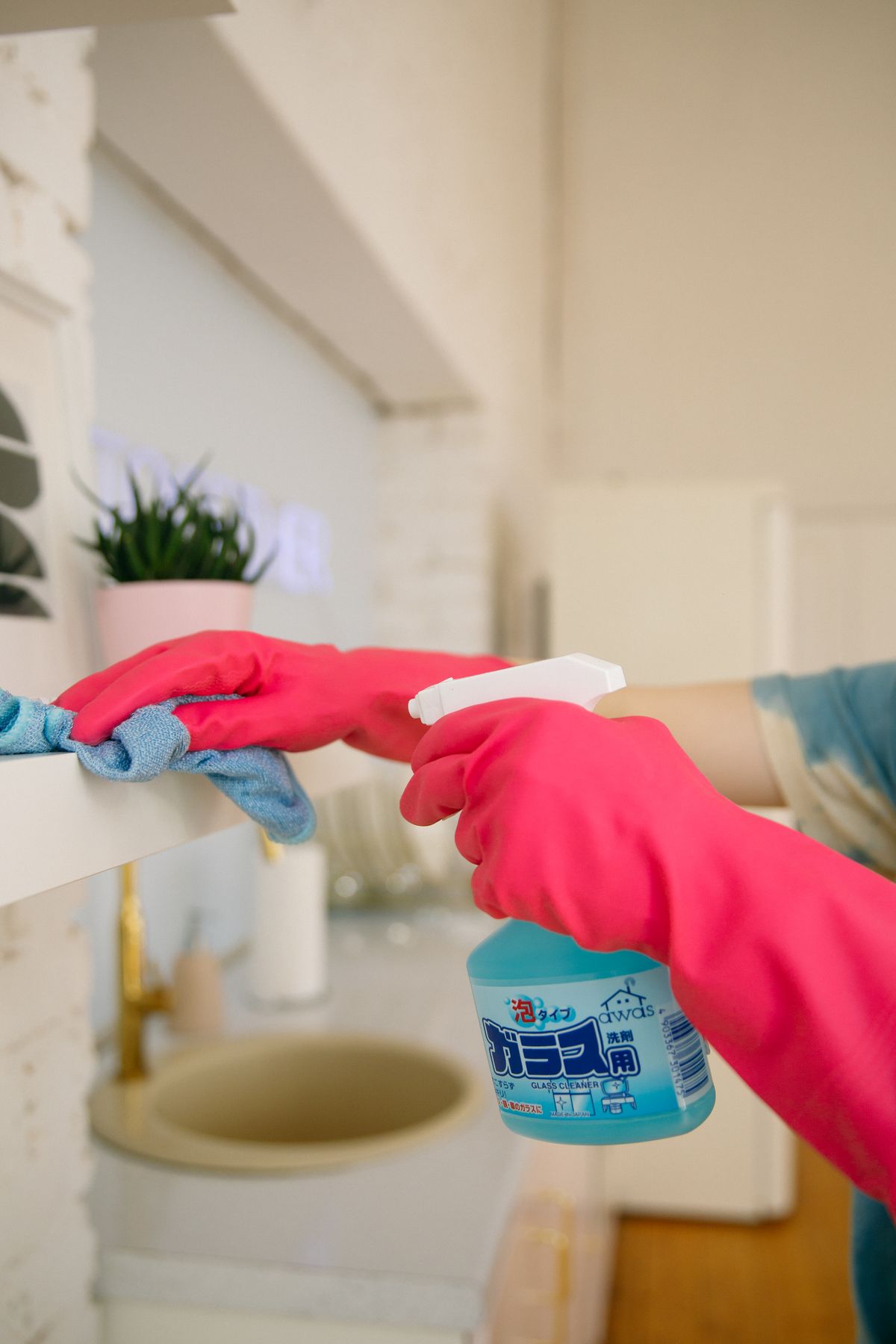
A shelf of homemade cleaners sounds lovely until a recipe fizzes, smells strange and cleans nothing. These nine are the ones that survive real life: simple ratios, cheap ingredients you probably own, and honest notes about where each one works and where it does not. A few rules before you start: label every bottle, never mix vinegar with bleach, keep acidic mixes like vinegar away from marble and natural stone, and test any new recipe on a small hidden spot first.
1. Citrus Vinegar All-Purpose Spray
Fill a jar with leftover lemon or orange peels, cover with white vinegar and let it sit for one to two weeks. Strain, mix one part citrus vinegar with one part water in a spray bottle, and you have a degreasing spray for counters, sinks and the stove. The peels tame the vinegar smell and add real cleaning power. Skip it on stone counters, where acid can etch the surface, and use the soft scrub below instead.
2. Baking Soda Soft Scrub
Mix baking soda with just enough water or castile soap to make a paste the texture of frosting. Spread it on sinks, tubs, oven doors or grout, let it sit for ten minutes, then scrub with a sponge and rinse. It lifts soap scum and baked-on grime without scratching most surfaces, and it deodorizes while it works. Make it fresh each time, because the paste dries out in storage and loses its easy-spreading texture.
3. Streak-Free Glass Cleaner
Combine two cups of water, half a cup of white vinegar and a tablespoon of cornstarch in a spray bottle, and shake well before each use. The cornstarch is the old-fashioned secret: it stops the streaks that plain vinegar can leave on mirrors and windows. Spray, wipe with a microfiber cloth, then buff dry with a second cloth. Shake the bottle every few sprays, because the cornstarch settles quickly at the bottom.
4. Lemon and Salt Cutting Board Refresh
Sprinkle coarse salt over a wooden cutting board, then scrub it with half a cut lemon, squeezing as you go. The salt works as a gentle abrasive, the lemon cuts grease and leaves the board smelling fresh, and together they lift stains from garlic and onions. Let the juice sit for five minutes, scrape the board clean, rinse and dry it standing up. Finish with a thin coat of food-safe oil if the wood looks dry.
5. Castile Soap Floor Cleaner
Add a quarter cup of liquid castile soap to a bucket of warm water for mopping tile, sealed laminate and linoleum. It cuts everyday grime without leaving the sticky film that detergent overdoses cause; if floors ever feel filmy, the fix is using less soap next time and rinsing with plain water. A few drops of your favorite essential oil are optional for scent. Avoid vinegar-based mixes on floors, which can dull some finishes over time.
6. Microwave Steam Clean
Fill a microwave-safe bowl with water and a tablespoon of vinegar or a few lemon slices, then run the microwave for three to five minutes until the window steams up. Leave the door closed for two more minutes so the steam loosens everything, then wipe the inside with a cloth: dried splatters come off with almost no scrubbing. Finish by wiping the door seal and the turntable, which is where odors like to hide.
7. Baking Soda Carpet and Mattress Deodorizer
Sprinkle baking soda generously over carpets, rugs or a mattress, leave it for at least 30 minutes (overnight is better), then vacuum slowly and thoroughly. The soda absorbs the odors that vacuuming alone cannot reach, including pet smells and that closed-room staleness. If you like a scent, mix a few drops of essential oil into the soda before sprinkling. This one is a refresh, not a deep clean, but the difference is obvious.
8. Toilet Bowl Fizz Cleaner
Pour one cup of baking soda into the bowl, then slowly add one cup of white vinegar and watch it fizz. Let it sit for 15 to 30 minutes, scrub with the toilet brush and flush. The fizzing loosens light stains and neutralizes odors, and a pumice stone made for toilets handles any stubborn ring that remains. It will not replace a heavy-duty descaler on months of mineral buildup, but as a weekly routine it keeps the bowl easy to clean.
9. Olive Oil and Vinegar Wood Polish
Mix two parts olive oil with one part white vinegar and a few drops of lemon juice, apply a small amount to a soft cloth, and rub it into wood furniture following the grain. The vinegar lifts dust and grime while the oil conditions the surface and brings back the shine. Use it sparingly: a little goes a long way, and too much leaves a film. Buff with a clean cloth at the end for a finish that looks freshly polished.
Nine recipes, four basic ingredients, and a cleaning shelf that costs a fraction of the store-bought version. Start with the all-purpose spray and the soft scrub, since those two handle most of the house, and add the others as you need them. Natural cleaning works best as a routine: small, regular jobs with simple products, instead of one heroic deep clean with harsh chemicals.