

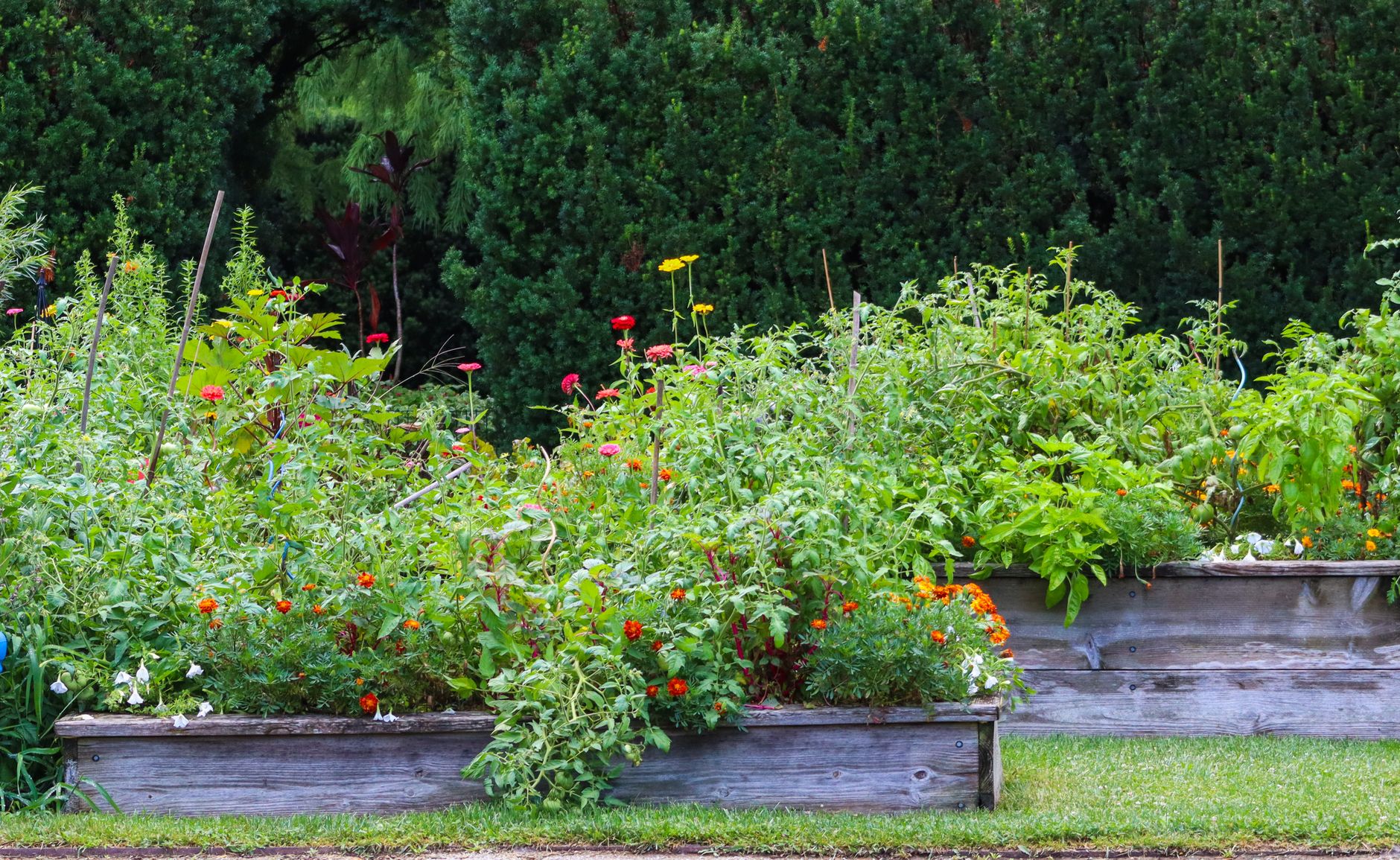
Raised beds are one of the best ways for beginners to start growing vegetables, herbs, and flowers. They warm up faster in spring, drain well, and keep your soil loose and easy to work. You also get fewer weeds, less bending, and a tidy garden that is simple to plan. These eight ideas will help you build your first raised bed and fill it with plants that thrive.
1. Start with One Small Bed
Begin with a single bed about four feet wide and six to eight feet long, so you can reach the center from both sides. A small bed is easy to build, fill, and care for, and it still grows a surprising amount of food. You can always add more beds later, once you know what you like to grow. Starting small also keeps the project affordable and prevents a new gardener from feeling overwhelmed.
2. Choose a Sunny, Level Spot
Most vegetables need at least six hours of direct sun each day, so pick the brightest spot in your yard. A level area makes building easier and stops water from pooling at one end of the bed. Keep the bed close to a water source and a path, because you will visit it often for watering and harvesting. Avoid low spots where rain collects and roots can stay too wet.
3. Use Untreated Wood or Metal
Untreated cedar, pine, or redwood are popular choices for raised beds because they are sturdy, natural, and safe for food plants. Metal beds are another good option, since they last for many years and warm up quickly in spring. Avoid old railroad ties or treated wood with chemicals you would not want near your vegetables. Whichever material you choose, make the sides at least ten inches tall for healthy root growth.
4. Fill with the Right Soil Mix
Good soil is the secret to a productive raised bed, so do not fill it with plain garden dirt. A mix of topsoil, compost, and a little perlite or vermiculite gives plants nutrients, moisture, and drainage. Fill the bed almost to the top, water it well, and top it up again as the soil settles. Each season, add a fresh layer of compost to keep the soil rich and alive.
5. Try Square Foot Gardening
Square foot gardening divides a bed into one-foot squares, with a set number of plants in each square. For example, you might grow one tomato, four lettuces, or sixteen carrots in a single square. This method makes planning simple, reduces weeds, and helps you use every inch of space. It is especially helpful for beginners, because it turns a big garden into small, manageable steps.
6. Grow Easy Vegetables First
Start with forgiving crops such as lettuce, radishes, green beans, zucchini, and tomatoes. These vegetables grow fast, need little special care, and give you a quick reward for your work. Plant what your family actually likes to eat, and add herbs like basil and parsley around the edges. Early success will build your confidence and make you eager to try more challenging plants next season.
7. Add a Simple Watering Routine
Raised beds dry out faster than ground-level soil, so regular watering is essential, especially in summer. Water deeply in the morning, so the moisture reaches the roots and the leaves dry before nightfall. A soaker hose or drip line saves time, uses less water, and keeps the foliage dry. Check the soil with your finger often, and water when the top inch feels dry to the touch.
8. Mulch and Protect Your Beds
A layer of straw, shredded leaves, or bark mulch keeps the soil moist, cool, and mostly free of weeds. Mulch also feeds the soil as it breaks down and protects plant roots from hot sun and heavy rain. In fall, cover empty beds with compost or a cover crop to keep the soil healthy over winter. A little care at the end of the season makes spring planting much easier.
With these eight ideas, a raised bed garden is well within reach for any beginner. Start with one bed, fill it with good soil, and grow a few easy crops you love. Save this guide for your next weekend project and share it with a friend who wants to start gardening too.