

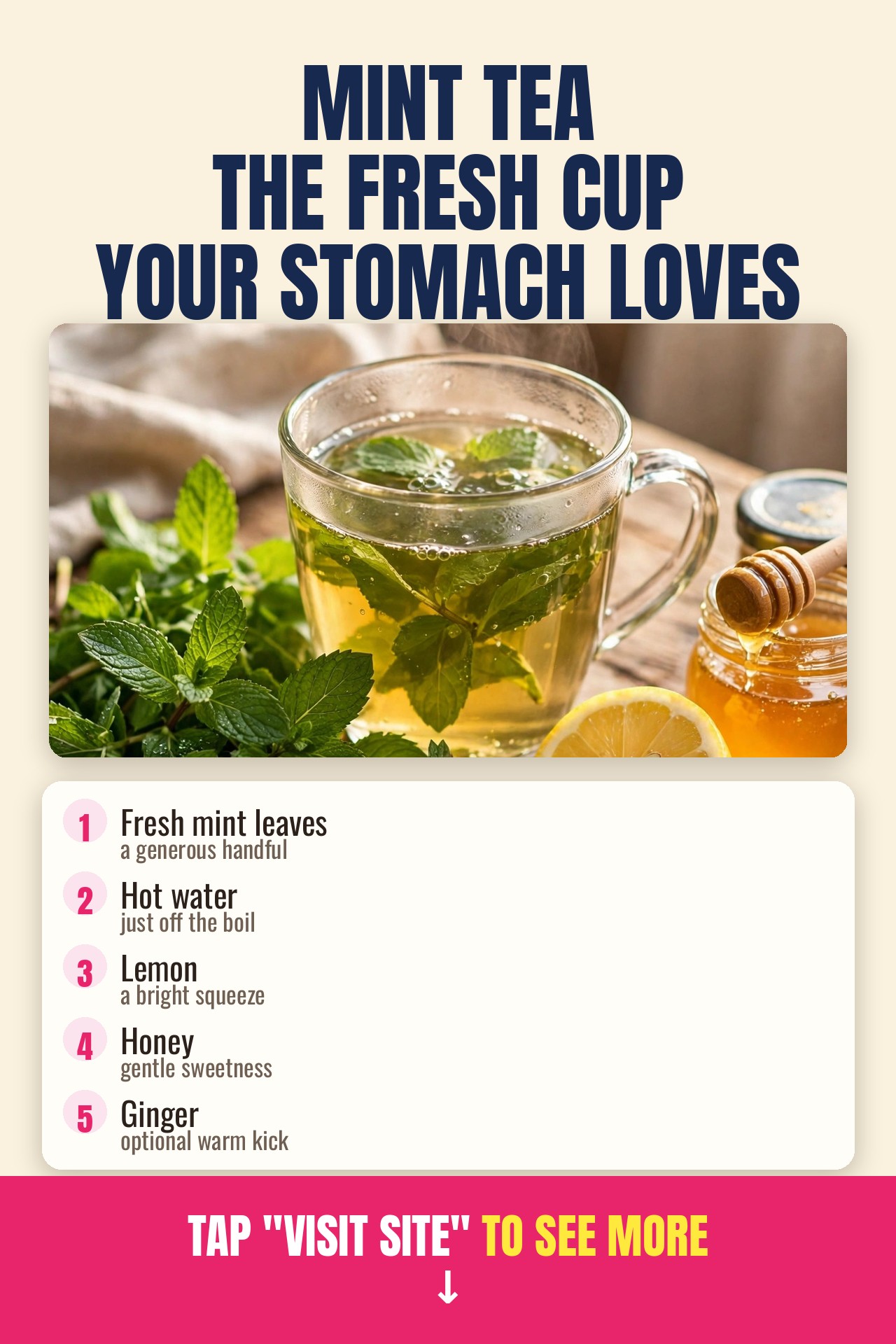
Some remedies are complicated. Mint tea is not one of them. A handful of green leaves, a pot of hot water and ten quiet minutes are all it takes to make one of the oldest and most loved herbal drinks in the world. From Mediterranean courtyards to Middle Eastern tea houses, fresh mint tea has been the cup people reach for after a big meal — and once you try it, it is easy to understand why. It is fresh, naturally caffeine-free and gentle enough to enjoy every single day.
What you need
- 1 generous handful of fresh mint leaves (about 20–25 leaves)
- 2 cups of hot water (about 500 ml)
- Juice of 1/2 lemon (optional, but lovely)
- 1 teaspoon of honey (optional)
- 1 small slice of fresh ginger, if you like a gentle kick
How to prepare it
- Rinse the mint leaves gently and bruise them lightly between your palms — this releases their aromatic oils.
- Place the leaves (and ginger, if using) in a teapot or heatproof jar.
- Pour over hot water that has just stopped boiling. Boiling water can make mint taste dull, so let the kettle rest for one minute first.
- Cover and steep for 5–10 minutes. The longer it rests, the deeper the flavor.
- Strain into your favorite cup, add lemon and honey to taste, and sip it slowly while it is warm.
Why this simple cup helps so much
Mint is traditionally used to support comfortable digestion after meals — that light, un-bloated feeling so many people notice after a cup is exactly why the ritual has survived for centuries. Its natural menthol gives a cooling sensation that helps you feel fresh from the inside out, and it is a classic home ally for fresher breath after food. Because it contains no caffeine, mint tea is also a wonderful evening cup: warm, soothing and kind to your stomach before bed. And simply holding a warm, fragrant cup and sipping it slowly gives your mind a small pause — a mini ritual of calm in the middle of a busy day.
Practical tips
- Fresh mint is best, but 1 teaspoon of dried mint per cup works when fresh is not available.
- Grow your own: mint is one of the easiest herbs to keep in a pot on a sunny windowsill — just keep it in its own pot, because it loves to spread.
- Try it iced in summer: brew it strong, chill it, and serve with ice, lemon slices and extra leaves.
- After meals is the classic moment, but there is no wrong time for a cup of mint tea.
One honest note: mint tea is a gentle food tradition, not a medicine. If digestive discomfort is frequent or strong, a doctor can help you find the real cause. But as a daily ritual — fresh, green and fragrant — few cups are easier to love.