

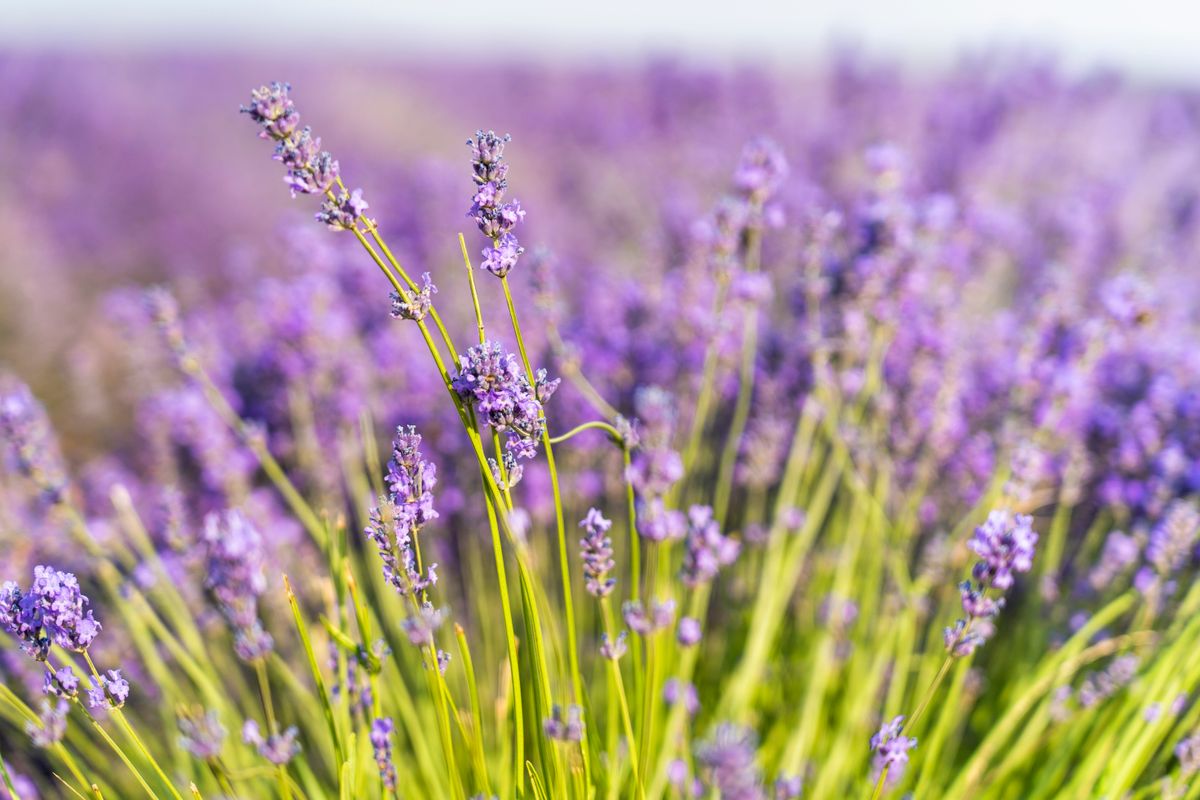
Lavender should be the easiest plant in the garden: a silvery mound covered in purple spikes, humming with bees and perfuming the whole path every time you brush past it. Yet many gardeners watch their plants turn woody, sparse and flowerless within two seasons. Almost always, the problem is kindness in the wrong place: too much water, too rich soil, or a shady, sheltered corner. Lavender comes from dry Mediterranean hillsides, and it rewards gardeners who copy those conditions. Follow these nine lavender growing tips and your plants will stay compact, fragrant and healthy for years.
1. Give It the Sunniest Spot You Have
Lavender is a true sun worshipper and needs at least six to eight hours of direct sun a day to bloom well and build the oils that make it fragrant. A south-facing border, a gravel strip beside a sunny wall, or the top of a slope are all perfect homes. In shade, stems stretch, flower spikes shrink and the whole plant loses its perfume.
2. Make Drainage Your First Priority
More lavender dies from wet roots than from cold, drought or neglect combined. The roots rot quickly in heavy, waterlogged soil, especially in winter. Before planting, dig in plenty of coarse grit or sharp sand, and raise the plant slightly on a low mound so water runs away from the crown. If water sits on the surface after rain, lavender will never be happy there.
3. Keep the Soil Lean, Not Rich
Unlike roses or vegetables, lavender flowers best in poor, lean ground. Rich soil and heavy feeding push soft, leafy growth with few blooms and a weak scent, and the plant becomes vulnerable to frost and disease. Skip the manure and the general fertilizer altogether. A light dressing of garden lime in very acidic soil and a handful of gritty mulch around, but never against, the stems is all a healthy plant asks for each year.
4. Space Plants for Airflow
Crowded lavender traps humid air around its foliage, which encourages grey mould and shabby, bare centres. Space plants roughly sixty to ninety centimetres apart, depending on the variety, so air and sun reach every side. Good spacing also shows off the neat silver mounds that make lavender such a good edging plant.
5. Water Deeply but Rarely
New plants need regular watering while their roots establish during the first season, but established lavender is remarkably drought tolerant. Water deeply only during long dry spells, and always at the base, in the morning, so the foliage stays dry. Frequent light sprinkles do real harm: they keep the crown damp and train roots to stay near the surface. In pots, water thoroughly, then let the compost dry out properly before watering again. When in doubt, wait another day.
6. Prune Twice a Year, Never Into Old Wood
Pruning is the secret to a compact, long-lived plant instead of a woody tangle. After the main summer flowering, trim the flower stalks and shape the mound lightly. Then, in spring, cut back again more firmly, removing about a third of the green growth. The golden rule is to always leave green shoots below your cut: lavender rarely sprouts from bare old wood, so cutting into it can kill that whole stem. Little and often beats one brutal rescue prune.
7. Choose the Right Variety for Your Climate
Not all lavenders cope with the same winters. English lavenders, the angustifolia types such as Hidcote and Munstead, are the hardiest and the most fragrant, and suit cold gardens best. French and Spanish lavenders have showy tufted flowers but dislike hard frost, so they shine in mild areas or in pots you can shelter. Matching the variety to your winters, rather than to the prettiest label in the shop, is the difference between a plant that returns for a decade and one that vanishes by spring.
8. Harvest Flowers at Just the Right Moment
For the strongest scent, cut lavender spikes when about half the tiny flowers on each spike have opened, on a dry morning after the dew has lifted. Bundle small bunches loosely and hang them upside down in a dark, airy place for a week or two. Harvesting also works as a light prune, keeping the plant tidy and encouraging a smaller second flush later in the season.
9. Mulch With Gravel, Not Bark
A mulch of pale gravel or grit around lavender does three jobs at once: it keeps rain splashing off the crown, reflects heat and light up into the plant, and suppresses weeds without holding moisture against the stems. Bark and compost mulches do the opposite, staying damp and inviting rot. Spread gravel five centimetres deep, keeping it just clear of the crown itself. In cold, wet districts, that dry, stony collar is often what carries a plant safely through winter.
Get sun, drainage and pruning right, and lavender practically looks after itself. It asks for poor soil, little water and no feeding, then pays you back with months of colour, a garden full of bees and armfuls of fragrant spikes for the house.