

A garden without bees and butterflies can look perfect and still feel strangely silent. Pollinators bring the movement, sound and life that turn a planted space into a living one, and they repay the favour by pollinating your fruit, vegetables and flowers. The trick is not planting one fashionable flower but offering a long season of nectar and pollen, from the first hungry queen bumblebee in spring to the last butterfly fuelling up for winter. These ten pollinator plants are proven magnets, chosen for reliability, long flowering and sheer pulling power. Plant a handful of them and your garden will start to hum.
1. Lavender
Lavender is the pollinator plant every bee would vote for. Its spikes carry hundreds of tiny nectar-rich flowers over a long summer season, and on a warm day a single bush can hold dozens of bees at once. Plant it in full sun and poor, well-drained soil along a path edge, where the flowers sit at perfect foraging height and the scent releases as you pass.
2. Coneflower
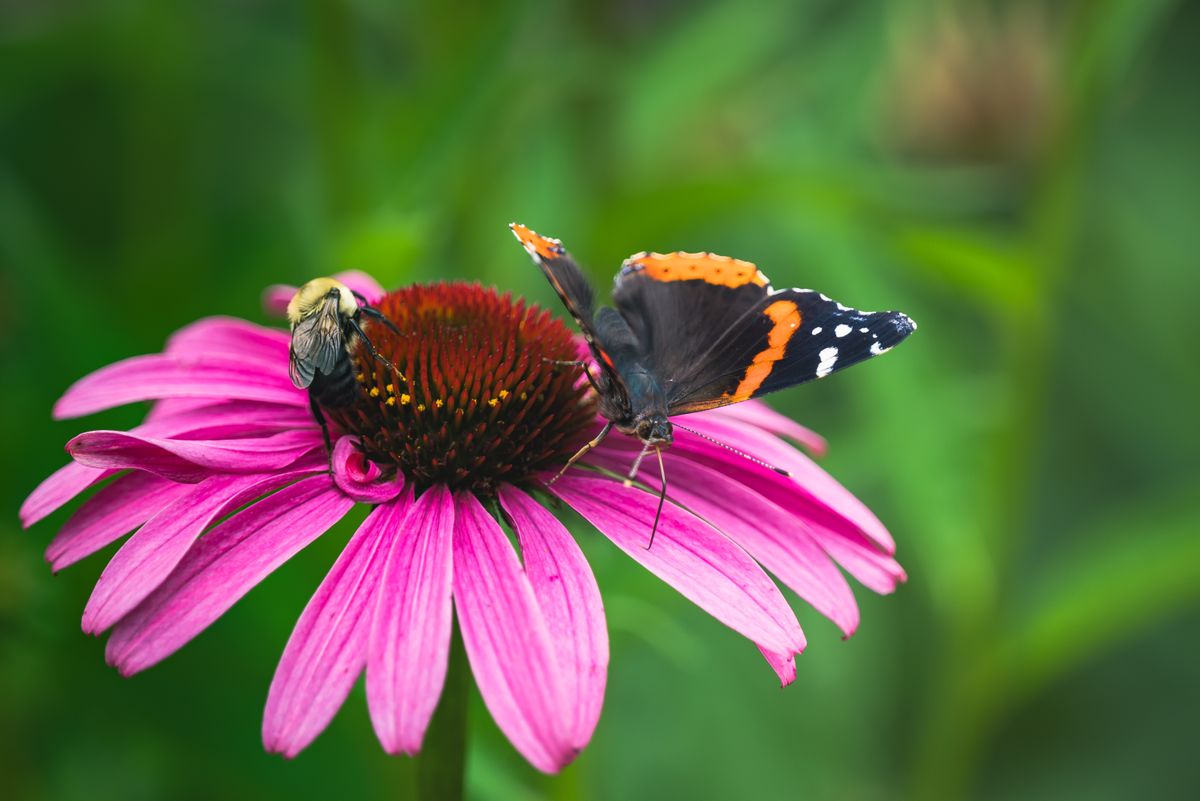
Coneflowers offer big, flat landing pads crowded with nectar, exactly what butterflies need. They flower from midsummer into autumn, when many other plants are finished, and their seed heads feed goldfinches if you leave them standing. Bees work the central cone all day long. Plant in drifts of three or five for a display that pollinators can spot from far away.
3. Buddleia
The butterfly bush earned its name honestly: a flowering buddleia can draw dozens of butterflies on a still, sunny afternoon, from painted ladies to peacocks. Its long flower spikes bloom for weeks in high summer. Choose a sunny, sheltered corner, prune hard each spring to keep it compact, and consider a sterile variety if your region worries about self-seeding.
4. Borage
Borage is a bee supermarket. Its starry blue flowers refill with nectar faster than almost any other garden plant, so bees return to the same flower again and again all day. It flowers for months, self-seeds cheerfully and its young leaves and flowers are edible for you too. Sow it near vegetables that need pollinating, like courgettes and strawberries, and watch your harvests improve.
5. Catmint
Catmint’s clouds of violet-blue flowers are worked constantly by bees from late spring onwards, and a quick shear after the first flush brings a second wave of bloom. It is tough, drought-tolerant once established and its aromatic foliage deters few pollinators but many pests. Edge a sunny border with it and you create a nectar corridor that hums for months.
6. Single Dahlias
Open, single-flowered dahlias are late-season gold for pollinators, offering easy-access pollen and nectar from midsummer until the frosts, just when colonies are building winter strength. Avoid the big double pompons, whose petals lock insects out completely. Bishop-style dahlias with dark foliage and simple flowers combine drama for you with a genuine feast for bees and hoverflies.
7. Verbena Bonariensis
Tall, airy verbena floats its purple flower clusters at butterfly height, weaving through a border without shading anything beneath it. Butterflies and hummingbird hawk-moths feed from it for hours, and it flowers from summer deep into autumn. It self-seeds lightly into gravel and gaps, which only adds to its charm. Few plants give a border so much life for so little ground space.
8. Sedum
Sedum’s broad, flat flower heads open in late summer and autumn, providing a dense nectar table exactly when butterflies are fuelling up and bees are making their last big collections. The flowers are so loaded with insects on warm September days that the plant seems to vibrate. It asks for nothing but sun and sharp drainage, and its seed heads look handsome all winter.
9. Wild Marjoram
Wild marjoram, the oregano of herb gardens, is one of the highest-rated nectar plants ever measured, and its flat pink flower heads are a favourite refuelling stop for butterflies, including rare blues where they occur. Grow it in a sunny, poor-soil corner or a herb bed, let it flower rather than harvesting every stem, and it will reward you with wings all summer.
10. Ivy
Ivy is the unsung hero of the pollinator year. Its modest autumn flowers open when almost nothing else does, feeding bees, hoverflies and red admiral butterflies preparing for winter, and its berries feed birds afterwards. Let a section of ivy mature and flower on a fence or wall you do not need to keep clipped, and you complete the season-long menu your garden offers.
Plant for a season, not a moment: something in flower from the first spring bee to the last autumn butterfly, planted in sunny drifts and left unsprayed. Add a shallow dish of water with pebbles for drinking, and your ten plants become a working refuelling station. The reward is a garden that moves, hums and quietly helps every fruit and flower you grow.