

Daniel Hayes lost his hearing when he was twenty years old. Meningitis took it in a single brutal week — the music he loved, the sound of his own voice, the small noises of the world — all of it gone before he had time to say goodbye. He learned to read lips, to sign, to feel the world through his hands and feet instead of his ears. He built a good life anyway: a job he loved, a wife who learned to sign beside him, and a daughter, Emma, who grew up tapping rhythms on his shoulder so he could feel the songs she loved.
But when Emma got engaged, Daniel felt a fear he had not felt in years. Every father dreams of the father-daughter dance, and every daughter dreams of it too — and Daniel could not hear a single note of the music. Emma never said a word about it. She only hugged him a little tighter when the subject came up, and told him, with her hands and her smile, that it did not matter. Daniel knew better. It mattered to her. And so, eight months before the wedding, he made a secret plan.
He found a dance teacher named Rosa, a patient woman in her sixties who had once taught a deaf ballroom champion. She did not teach Daniel to hear the music. She taught him to feel it: the thump of the bass through the wooden floor, the vibration of the speaker against his palm, the flash of a small light she set beside the stereo, blinking on every beat. They practiced twice a week in her studio, Daniel counting in his head — one, two, three, one, two, three — until the steps lived in his muscles.
But the waltz they had chosen was slow and gentle, and the beat was hard to feel through the floor. So Rosa gave Daniel a different idea, one that made him laugh out loud in the middle of the studio. “Your daughter’s heart,” she said. “When she was a baby, how did you know she was calm? You put your hand on her chest and counted.” Daniel remembered at once: the long nights when baby Emma would only sleep with his palm over her tiny heart, thump-thump, thump-thump, steady as a metronome.
For months, Daniel practiced with a stethoscope pressed to his own chest and a metronome set to seventy-two beats a minute — the resting rhythm of a calm, happy heart. He learned to dance to a heartbeat instead of a song. He practiced in the kitchen while his wife clapped the rhythm on the counter. He practiced in the garden, stepping in time to the pulse in his own wrist. And every time he stumbled, he thought of Emma’s face on her wedding day, and he started again.
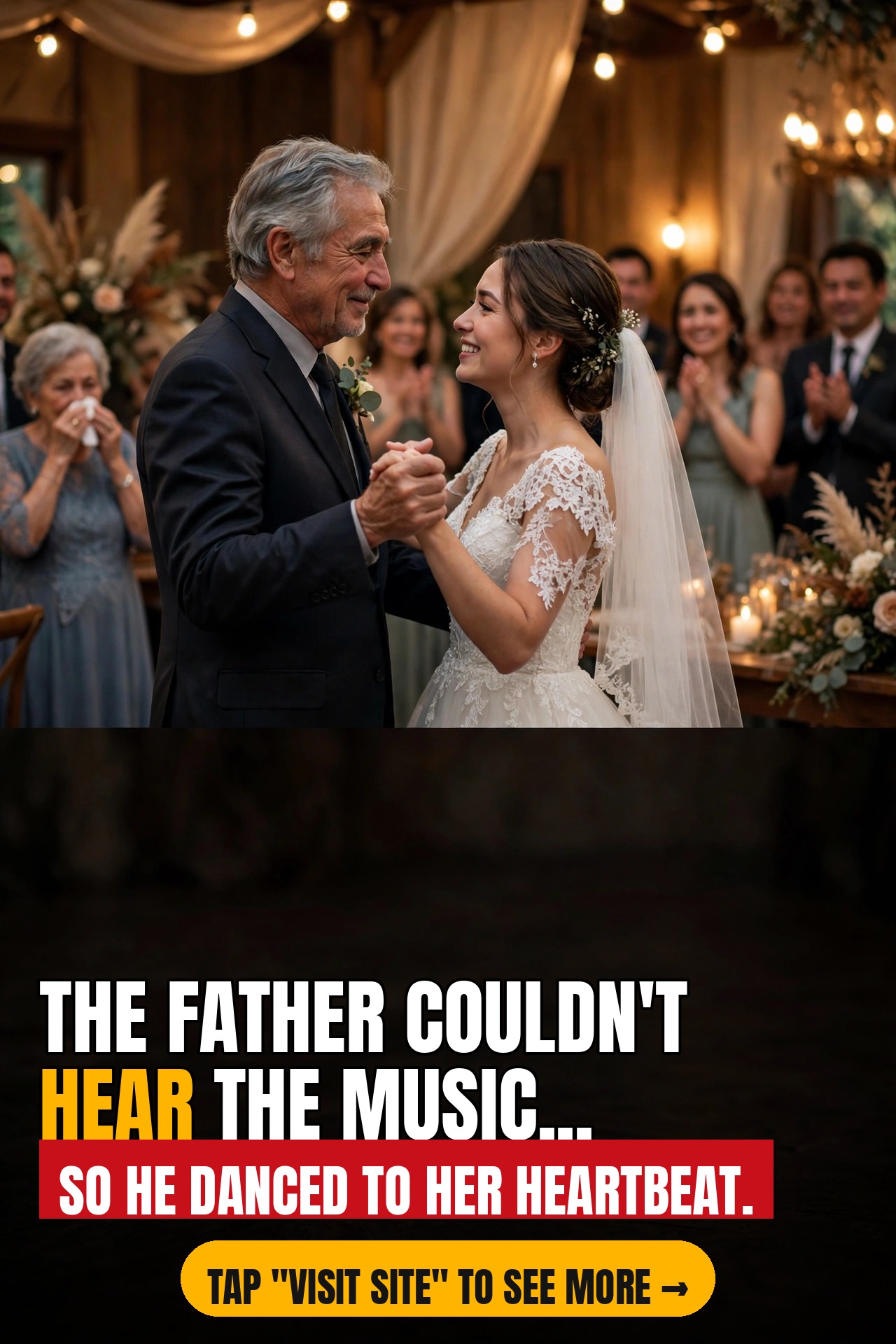
On the wedding night, the band began to play, and the guests turned to watch. Emma walked to the middle of the floor in her white dress, her eyes shining, and Daniel took her hand. Then he did something no one expected: he placed his hand gently over her heart, closed his eyes for a single second, and smiled. He could feel it — steady, joyful, seventy-two beats a minute — and when he opened his eyes, he began to move. Step, turn, sway. Perfectly in time.
The room went silent, and then the tears began. Emma realized what he was doing — she could feel his hand following her heartbeat, keeping time with the music she could hear and he could not — and she laughed through her tears and whispered, “Dad, you’re dancing.” They glided across the floor as the song swelled, father and daughter moving as one, and when the last note faded, Daniel felt her heart slow beneath his palm, and he dipped her low, just as Rosa had taught him. The applause shook the floor beneath his feet, and he felt every bit of it. Later, Emma told him it was the most beautiful dance she had ever seen. Daniel just pressed his hand to his own heart and signed the three words he had known since she was born: “I heard you.”