

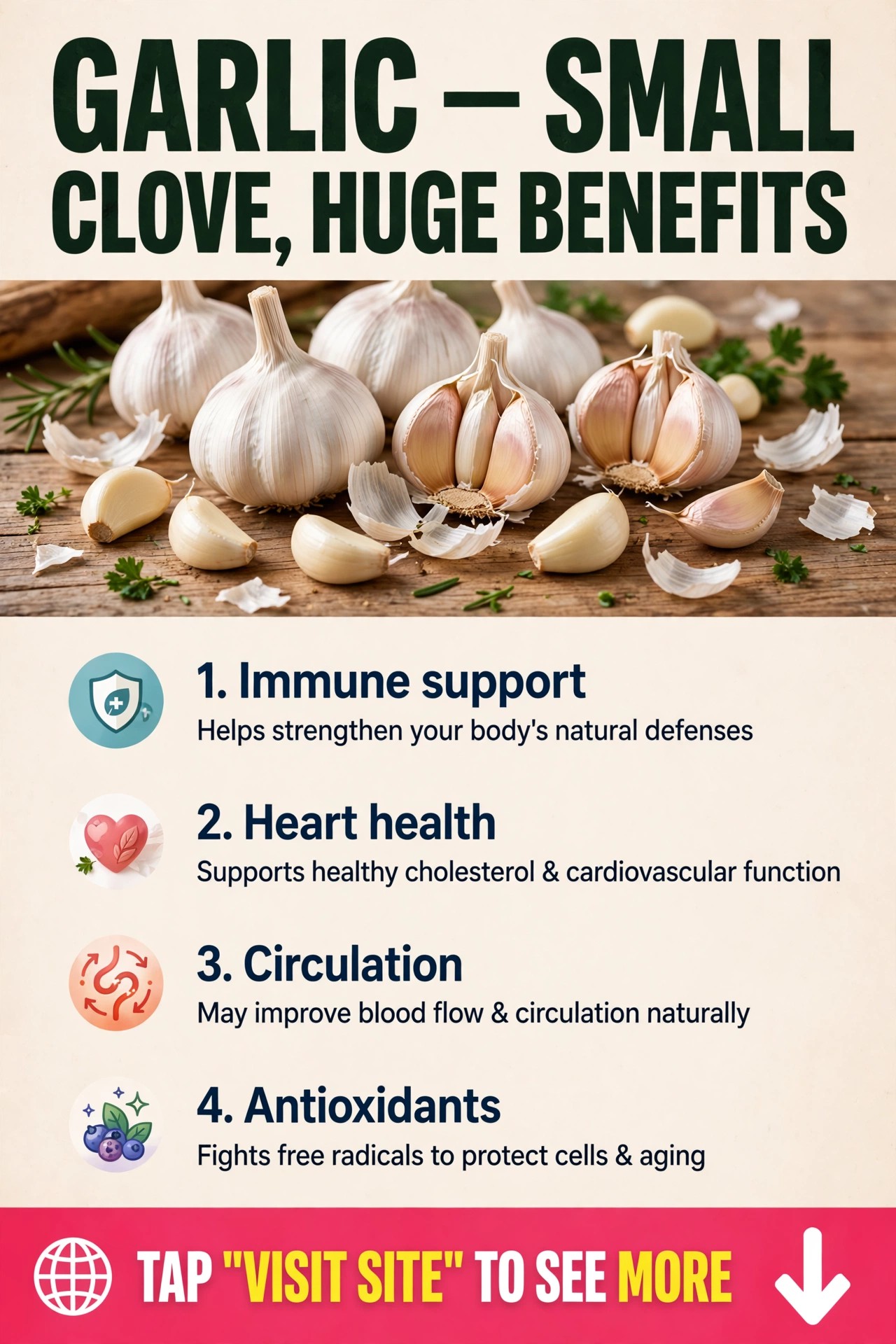
It’s small, it’s humble, and it’s probably sitting in your kitchen right now. Garlic has flavored our food for thousands of years — and just as long, it has been valued in traditional wellness practices from Egypt to China to the Mediterranean. Modern nutrition research keeps finding reasons to agree with grandma: this little clove is packed with compounds that help support your body in impressive ways. Here are seven benefits that make garlic a true kitchen superstar.
1. Immune support. Garlic is traditionally used to help support the immune system, especially during the change of seasons — one reason garlic-rich soups are a cold-weather classic.
2. Heart-friendly tradition. Garlic has long been associated with supporting cardiovascular health as part of a balanced diet, including helping maintain healthy blood pressure already in the normal range.
3. Circulation support. Its natural compounds are valued for supporting healthy blood flow, which is part of why garlic features in so many «artery-friendly» traditional recipes.
4. Antioxidant power. Garlic contains antioxidants that help protect your cells from everyday oxidative stress.
5. Digestive support. Used in cooking for centuries, garlic helps wake up flavors and is traditionally used to support comfortable digestion and a balanced gut environment.
6. Nutrient density for almost no calories. A few cloves add manganese, vitamin B6, vitamin C and selenium to your meals — a lot of nutrition in a tiny package.
7. It makes healthy food delicious. Perhaps its greatest benefit: garlic makes vegetables, beans, soups and salads taste wonderful, which helps you actually enjoy eating well. A remedy you love using is the one that works.
Getting the most from garlic is easy. Crush or chop it and let it rest for about 10 minutes before cooking — this allows its best-known compound, allicin, to form. Add it near the end of cooking when you can, since long, intense heat reduces some of its qualities. Fresh garlic in dressings, garlic-infused olive oil, roasted whole heads spread on bread, or a clove blended into juices and sauces are all delicious ways to enjoy it daily.
One honest note: garlic is a food, not a medicine. People who take blood-thinning medication or are preparing for surgery should talk to their doctor about large amounts of garlic or supplements, since it can interact. As part of everyday cooking, though, it’s a flavorful ally that supports your wellness beautifully — and doesn’t replace medical advice.
Small clove, huge reputation — and entirely earned. Let garlic keep doing quietly in your kitchen what it has done for thousands of years.