

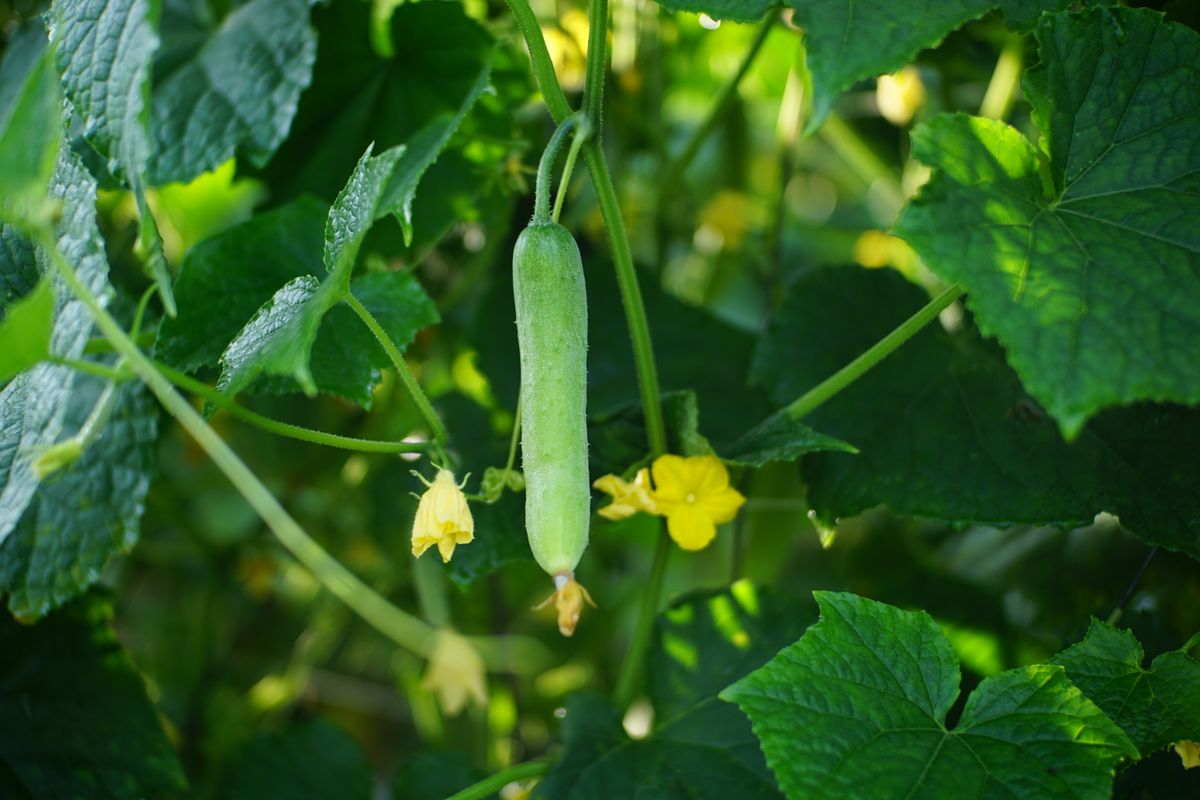
Cucumbers grow fast enough to watch, yet many gardeners end up with bitter, yellow, oddly bent fruit from plants that promised so much in June. The plant is not difficult; it is just thirsty, hungry and sensitive about two things: cold starts and uneven water. Bitterness, in particular, is almost always a stress signal rather than a variety problem. Give cucumbers warmth, a trellis, deep steady moisture and daily picking, and they repay you with armfuls of crisp fruit. These ten cucumber growing tips keep the harvest sweet from the first picking to the last.
1. Start Warm and Never Rush the Season
Cucumber seed sulks in cold soil and transplants stall if nights are chilly. Sow or plant out only when soil is properly warm and nights stay mild, or start seeds indoors in deep pots three weeks before planting out. A plant that starts warm grows explosively; a chilled one spends June recovering and never quite catches up with its later-sown neighbour.
2. Grow Up a Trellis, Not Across the Ground
Training vines up a trellis, net or arch saves space, keeps fruit clean and straight, improves airflow and makes picking a pleasure instead of an excavation. Tie stems in loosely as they climb, because tendrils need a little help finding the support at first. Fruit hanging in the air grows straighter and colours evenly, and slugs rarely bother climbing for dinner.
3. Water Deeply and Never Let Them Dry Out
Cucumbers are mostly water, and the plant knows it. Dry spells followed by floods are the classic recipe for bitter skins and hollow, seedy middles. Water deeply at the base two or three times a week rather than sprinkling daily, aiming for consistently moist soil. In heatwaves, a cucumber bed can need water every day; check with a finger, not a schedule.
4. Mulch Thickly to Hold Moisture Steady
A thick mulch of straw or shredded leaves is the cucumber grower’s insurance policy. It holds soil moisture between waterings, keeps roots cool, stops soil splashing onto leaves and suppresses the weeds that compete for water. Lay it once the soil has warmed, five to eight centimetres deep, and top it up mid-season as it settles and the vines spread.
5. Feed Little and Often Once Fruit Sets
Cucumbers are heavy feeders in full production. Work compost into the bed before planting, then feed every ten to fourteen days with a balanced liquid feed or tomato fertiliser once the first fruits form. Pale leaves and slow fruit growth mean the plant is hungry; dark, lush leaves with no fruit mean ease off the nitrogen and let it crop.
6. Pick Every Day, Smaller Than You Think
A cucumber left to swell into a yellow balloon tells the vine to stop producing and start ripening seed. Pick fruit young, glossy and firm, at the size the variety suggests or a little under, and pick every day in high summer. The more you pick, the more the plant makes; daily picking is genuinely the highest-yield habit on this whole list.
7. Keep Bees Happy and Flowers Pollinated
Misshapen fruit, fat at one end and pinched at the other, usually means poor pollination. Avoid spraying anything while flowers are open, plant a few flowering companions nearby, and water in the morning so bees work dry flowers. On still, bee-less days you can hand-pollinate: dab a male flower, the one without a tiny fruit behind it, onto the female flowers.
8. Watch the Undersides of Leaves Weekly
Powdery mildew and aphids both start on leaf undersides where nobody looks. Flip a few leaves every week: white powder means improve airflow and remove the worst leaves; aphid clusters blast off with a jet of water before they build up. Catching either problem in week one is a five-minute job; catching it in week four is a lost plant.
9. Shade Roots, Not the Vines, in Heatwaves
Cucumbers love heat but wilt dramatically at midday in extreme weather, which stresses fruit quality. The trick is cool roots under warm leaves: mulch does most of it, and a low companion planting or a pot shading the root zone helps in containers. The midday wilt itself is normal if plants recover by evening; if they do not, water deeply at once.
10. Sow a Second Batch in Midsummer
Spring-sown vines tire, mildew and slow down by late summer, just when salads matter most. Sow a second, smaller batch in midsummer directly where a tired plant will come out, and it crops fresh and clean into autumn. Succession sowing turns a six-week cucumber season into a four-month one, for the price of a few seeds.
Warm start, trellis up, water deep and steady, pick every day. Cucumbers reward routine more than genius: keep the moisture even and the harvest basket moving, and bitterness and bendy fruit simply stop happening.